
Here’s a fun exercise: picture a Volkswagen SUV that starts under $32,000, runs on a battery chemistry that doesn’t degrade if you charge it to 100% every night, and still has actual, physical buttons for the volume knob. Now picture Volkswagen looking straight at the U.S. market and saying, “nah, not for you.”
That’s the ID. Cross. And if you’re annoyed just reading that, good — you should be.
The quick take:
- All-electric compact SUV, built on VW’s MEB+ platform, world premiere in mid-July 2026
- Starts at €27,995 in Germany (roughly $30,000 at current exchange rates) — VW’s cheapest EV ever
- Two battery options (37 kWh and 52 kWh), three power outputs, up to 265 miles of WLTP range on the bigger pack
- VW has confirmed it: no U.S. launch planned. Europe gets it this autumn. We get to watch from the sidelines.
What it actually is
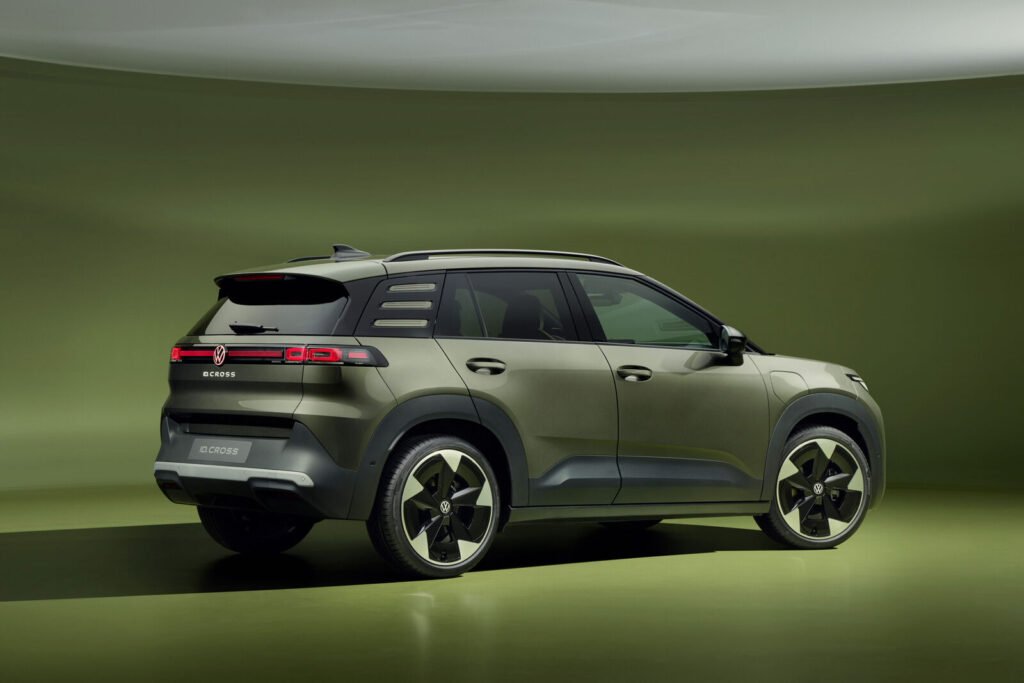
The ID. Cross is Volkswagen’s electric answer to its own T-Cross — same general footprint, zero exhaust pipe. It’s not a big vehicle. At 163.5 inches long and riding on a 102.4-inch wheelbase, it’s closer in size to a Chevy Trailblazer than anything we’d call a “midsize” crossover. But that’s the point. VW isn’t trying to out-Tesla anybody here. It’s trying to build something a normal person making a normal salary can actually afford to plug in every night.
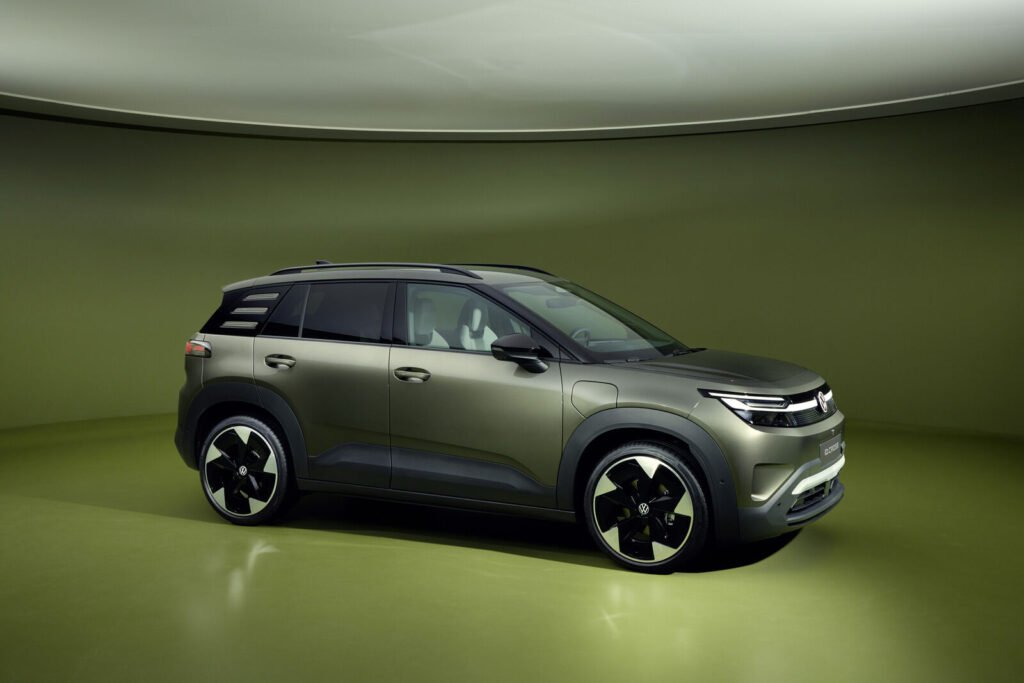
Design-wise, it’s got that upright, slightly boxy stance VW’s whole ID. family has settled into, but the proportions read cleaner than the ID.4’s — shorter overhangs, a nose that doesn’t try so hard to look “aerodynamic” that it forgets to look like a car. It won’t turn heads on a highway on-ramp the way something wilder would, and honestly, that’s fine. Not every EV needs to look like a spaceship.
Read More: 2026 Subaru Crosstrek Hybrid – Expert Review & Savings
Interior: VW actually listened this time
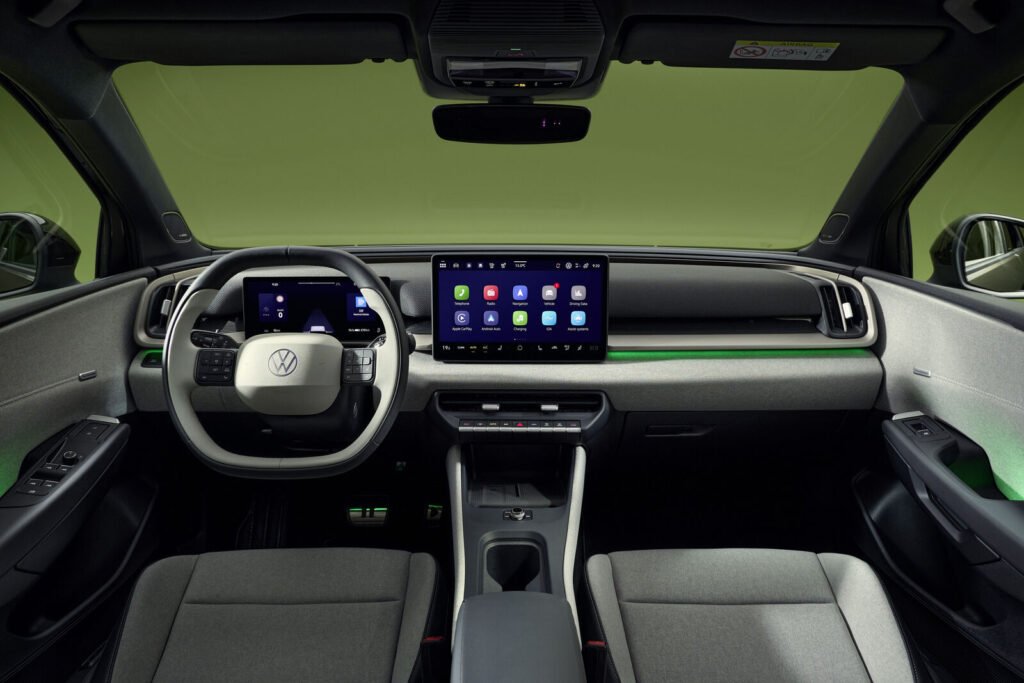
This is the part that matters most, and it’s the part most outlets are burying. After years of getting roasted for touch-slider volume controls that you couldn’t use without taking your eyes off the road, VW put real, physical buttons back in the ID. Cross. That’s not a small thing — it’s an admission. Volkswagen basically said, out loud, “yeah, we messed that up,” and fixed it.
Inside, you get VW’s new Innovision infotainment setup, fabric-covered dash surfaces instead of the hard, scratchy plastic VW’s interior team apparently loved a few years back, and a cabin that — based on the European press images — looks like it’s punching above its price bracket. I haven’t sat in one yet, so I won’t pretend I can tell you how the seat bolsters feel on a back road. But if the materials match what VW’s showing off in Wolfsburg, this is a genuinely nice place to sit for something starting under €28,000.
Power and range: no drama, and that’s the appeal
Three power outputs are planned: 85 kW, 99 kW, and 155 kW (211 PS, or right around 208 horsepower for those of us who think in American numbers). The launch trims — Life and Style — come with the top 155 kW motor paired to the bigger 52 kWh battery, good for a WLTP-rated range up to roughly 265 miles. The base Trend trim, arriving later, pairs the smaller 85 kW motor with a 37 kWh battery for a shorter-range, cheaper entry point.
Worth knowing: the smaller battery uses LFP (lithium iron phosphate) chemistry — the same family of cells Tesla uses in its standard-range Model 3 and Y. That’s a smart, unglamorous choice. LFP batteries don’t hold as much energy per pound as the fancier NMC chemistry in the bigger pack, but you can charge them to 100% every single night without quietly wrecking the battery’s long-term health the way you would with some other chemistries. For a car aimed at daily commuters, that’s the right tradeoff.
Nobody’s calling this thing quick. 155 kW isn’t going to pin you to the seat. But that was never the assignment here.
Pricing: this is the whole story
In Germany, the ID. Cross starts at €27,995 for the base Trend, and €36,525 for the higher-output Life and Style trims with the bigger battery. Converted rough-and-ready to dollars, that’s somewhere around $30,000 to $39,000 — before you even get into how European and American pricing structures don’t translate cleanly (different taxes, different incentive structures, different everything).
And that’s the number that should sting a little if you’re shopping for an affordable EV in the U.S. right now. We don’t have a sub-$32,000 electric SUV from a mainstream brand with this kind of interior quality. Not really. The segment here is either stripped-down cheap or comfortably into the $40s.
So why isn’t it coming here?
VW hasn’t been shy about it — a spokesperson confirmed flatly there are no plans to bring the ID. Cross to North America. Some of that is straightforward: Volkswagen’s U.S. EV lineup has had a rough couple of years. The ID. Buzz got quietly benched for the 2026 model year over soft sales. The ID.7 sedan got cancelled for North America before it ever really launched here. Against that backdrop, adding another low-margin, budget-focused EV into a market where EV demand has been shaky isn’t exactly VW’s top priority right now.
There’s a case that it should be. VW does have spare capacity at its Chattanooga, Tennessee plant, and the compact crossover segment — the one currently owned by the Toyota Corolla Cross, the Chevy Trailblazer, the Hyundai Kona — is the highest-volume, most price-sensitive part of the U.S. market. A sub-$35,000, well-built electric SUV from a name Americans already trust could do real damage in that segment. Never say never on a 2027 or 2028 introduction. But for now, this is a European car.
The verdict
If you’re in Germany or anywhere else in Europe this autumn, the ID. Cross looks like one of the smartest, most sensible EVs Volkswagen’s built in years — reasonably priced, sensibly equipped, and finally not fighting you over basic controls. If you’re in the U.S., the honest verdict is simpler: keep an eye on it, don’t hold your breath, and if you’re cross-shopping what’s actually available to you right now, it’s worth running the real numbers.
If you’re trying to figure out whether an EV like this — or anything currently sold stateside — actually saves you money over a comparable gas SUV once you factor in electricity rates, home charging costs, and fuel savings over five years, run it through our free EV vs Gas cost calculator. It’ll tell you a lot more than a press release will.
Specs and pricing verified against Volkswagen’s official Newsroom (volkswagen-newsroom.com) and cross-checked with Motor1 and CleanTechnica as of July 19, 2026. European pricing and specs are subject to change before the autumn 2026 launch, and no U.S. pricing exists because no U.S. launch is currently planned.
The Cheap Electric SUV VW Isn’t Selling in America
What it actually is / Interior: VW actually listened this time / Power and range: no drama, and that’s the appeal / Pricing: this is the whole story / So why isn’t it coming here? / The verdict
FAQ:
Q: Is the Volkswagen ID. Cross coming to the United States?
A: No. Volkswagen has confirmed there are no current plans to sell the ID. Cross in the U.S. market; it launches in Europe in autumn 2026.
Q: How much does the Volkswagen ID. Cross cost?
A: In Germany, it starts at €27,995 for the base Trend trim, rising to €36,525 for the higher-output Life and Style trims.
Q: What is the range of the Volkswagen ID. Cross?
A: Up to roughly 265 miles (WLTP) with the larger 52 kWh battery pack; less with the smaller 37 kWh LFP pack.