Canada’s EV Luxury Tax Change: Who Saves, and Why It Stops at $300,000
Ottawa has proposed raising the luxury-tax threshold for electric cars from $100,000 to $150,000. We calculated the saving at every price: up to $10,000, or $11,300 with Ontario HST, and nothing above $300,000.

In this article
Ottawa wants to stop charging luxury tax on most electric cars under $150,000. On 12 November 2026, the Department of Finance proposed raising the luxury-tax threshold for fully electric and hydrogen vehicles from $100,000 to $150,000, effective 13 November and subject to Parliament’s approval. We calculated what the change saves at every price point. The saving peaks at $10,000 (more with HST), and it disappears completely above $300,000.
The short answer
Electric cars priced between $150,000 and $200,000 save the most: $10,000 in luxury tax, or $11,300 once Ontario’s 13% HST is included.
EVs between $100,000 and $150,000 now pay no luxury tax at all, saving up to $10,000. Above $200,000 the saving shrinks, and from $300,000 it’s zero. Plug-in hybrids and gas cars still pay above $100,000.
What Ottawa announced
According to the Department of Finance release:
- The change: the price at which the luxury tax applies would rise from $100,000 to $150,000 for fully electric and hydrogen-powered vehicles.
- Everything else stays at $100,000. That includes gas cars and, since the release covers only fully electric and hydrogen vehicles, plug-in hybrids.
- Timing: it would apply from 13 November 2026, subject to subsequent parliamentary approval. It’s a proposal, not yet law.
- The formula doesn’t change: the tax is the lesser of 10% of the vehicle’s full value and 20% of the value above the threshold.
Finance Minister François-Philippe Champagne said the update reflects today’s vehicle market and supports the transition to a cleaner economy.
How much you save at each price
Because of the “lesser of” formula, the saving isn’t a flat amount. We calculated it at every price point:
| EV price (taxable value) | Luxury tax before | After proposal | Saving | Saving incl. 13% HST |
|---|---|---|---|---|
| $110,000 | $2,000 | $0 | $2,000 | $2,260 |
| $120,000 | $4,000 | $0 | $4,000 | $4,520 |
| $130,000 | $6,000 | $0 | $6,000 | $6,780 |
| $140,000 | $8,000 | $0 | $8,000 | $9,040 |
| $150,000 | $10,000 | $0 | $10,000 | $11,300 |
| $175,000 | $15,000 | $5,000 | $10,000 | $11,300 |
| $200,000 | $20,000 | $10,000 | $10,000 | $11,300 |
| $225,000 | $22,500 | $15,000 | $7,500 | $8,475 |
| $250,000 | $25,000 | $20,000 | $5,000 | $5,650 |
| $275,000 | $27,500 | $25,000 | $2,500 | $2,825 |
| $300,000 and up | 10% of price | 10% of price | $0 | $0 |
Why the saving stops at $300,000: above $200,000 under the old rule, 10% of the price was already the smaller amount, so buyers paid a flat 10%. Under the new rule, 20% of the value above $150,000 stays smaller until $300,000, after which both rules again charge 10%.
Why the real saving is bigger: GST/HST
The Canada Revenue Agency charges GST/HST on the vehicle price plus the luxury tax. So removing $10,000 of luxury tax also removes the sales tax on it. That’s worth $500 more in Alberta (5% GST) and $1,300 more in Ontario (13% HST), for a total saving of $10,500 or $11,300.
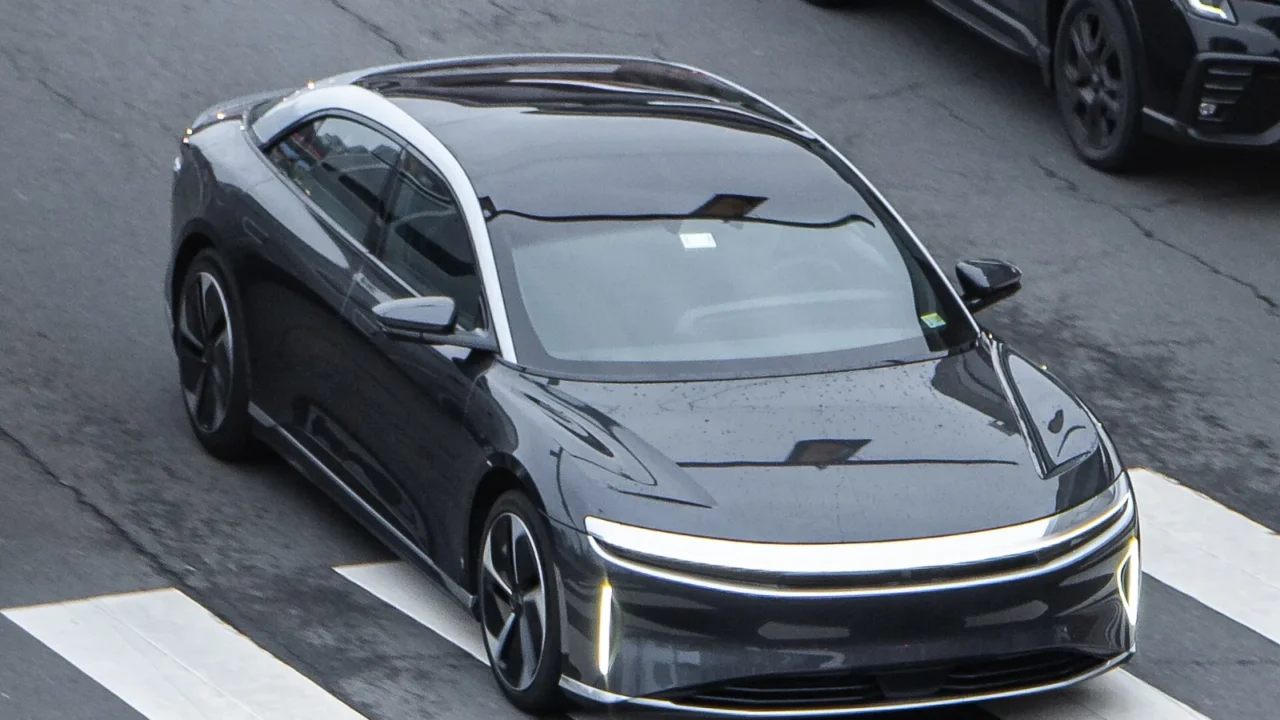
A real example: the Lucid Air lineup
Lucid’s four Air trims happen to cover every part of the curve. Using the Canadian prices on Lucid’s website (which include destination and documentation fees but exclude luxury and sales tax):
| Lucid Air trim | Canadian price | Luxury tax before | After proposal | Saving |
|---|---|---|---|---|
| Pure | $99,900 | $0 | $0 | None: already under $100,000 |
| Touring | $112,800 | $2,560 | $0 | $2,560 |
| Grand Touring | $161,200 | $12,240 | $2,240 | $10,000 |
| Sapphire (fully equipped) | $327,300 | $32,730 | $32,730 | None: over $300,000 |
Illustration only. The taxable value of a specific car can include options and other charges, so the exact amount on your bill of sale may differ.
Who benefits, and who doesn’t
- Benefits: buyers of premium EVs priced between $100,000 and about $300,000, such as higher-trim electric sedans and SUVs from luxury brands.
- No change for most EV buyers: most electric cars sold in Canada cost well under $100,000 and never paid luxury tax.
- No change for plug-in hybrids or gas cars: their threshold stays at $100,000.
- Heavy trucks are already outside the tax. Vehicles with a gross vehicle weight rating above 3,856 kg, such as several electric pickup versions, aren’t subject to the luxury tax at all.
Compare the full cost of ownership
Luxury tax is a one-time cost. Our calculator shows the 10-year cost of an electric car against a gas car in Canada, including the EV Affordability Program rebate, financing, charging and fuel.
FAQ
What is the new luxury tax threshold for electric cars in Canada?
The federal government has proposed $150,000 for fully electric and hydrogen-powered vehicles, up from $100,000, effective 13 November 2026 subject to parliamentary approval. All other vehicles stay at $100,000.
How is the luxury tax calculated?
It’s the lesser of 10% of the vehicle’s full value and 20% of the value above the threshold. For a $175,000 EV, that’s $5,000 under the new threshold, down from $15,000.
What’s the most an EV buyer can save?
$10,000 in luxury tax, for EVs priced between $150,000 and $200,000. With GST/HST charged on top of the luxury tax, that’s $10,500 in Alberta and $11,300 in Ontario.
Do plug-in hybrids get the higher threshold?
No. The announcement covers only fully electric and hydrogen-powered vehicles, so plug-in hybrids stay at $100,000.
Is the change law yet?
Not yet. It’s a proposal meant to apply from 13 November 2026, and it still needs Parliament’s approval.
How we calculated this
- Luxury tax: lesser of 10% of value and 20% of value above the threshold, with a $100,000 threshold before and a $150,000 threshold after, as described in the Department of Finance release.
- GST/HST: applied to the luxury tax as well as the price, per the CRA. We show Ontario’s 13% HST and Alberta’s 5% GST. Other provinces’ sales taxes work differently.
- Lucid Air prices: Lucid Canada’s website, November 2026, used as an approximation of taxable value.
This is a tax explainer, not tax or financial advice. Rules may change when the measure goes through Parliament.
Sources: Department of Finance Canada (12 Nov 2026) · CRA: luxury tax, consideration and retail value · Lucid Air Canada pricing

Faisal is the founder and editor of EV vs Gas Car Cost. He builds the site’s ownership-cost calculators and reviews new cars with one question in mind: what will this car really cost to buy, finance, fuel and run? His reviews are based on manufacturer specifications, official fuel-economy and efficiency ratings, and public fuel and electricity price data, which he cites in every article. He also publishes daily car review videos on his YouTube channel, CarRev3.