Honda Prologue vs. CR-V Hybrid: Which Costs Less Over 10 Years?
The electric Prologue costs only $3,915 more than a CR-V Sport Hybrid, but it saves just $2,900 on energy over 10 years. At average US prices the CR-V Hybrid is about $7,150 cheaper. Here's when the Prologue wins.

In this article
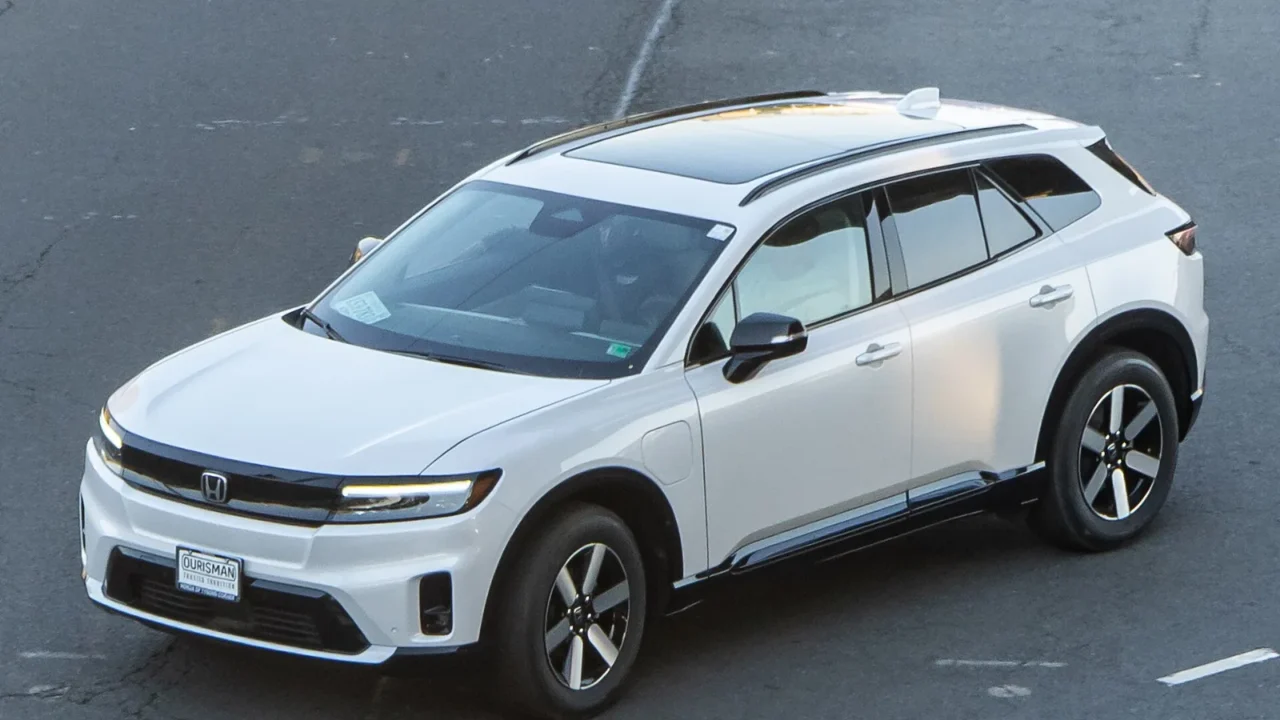
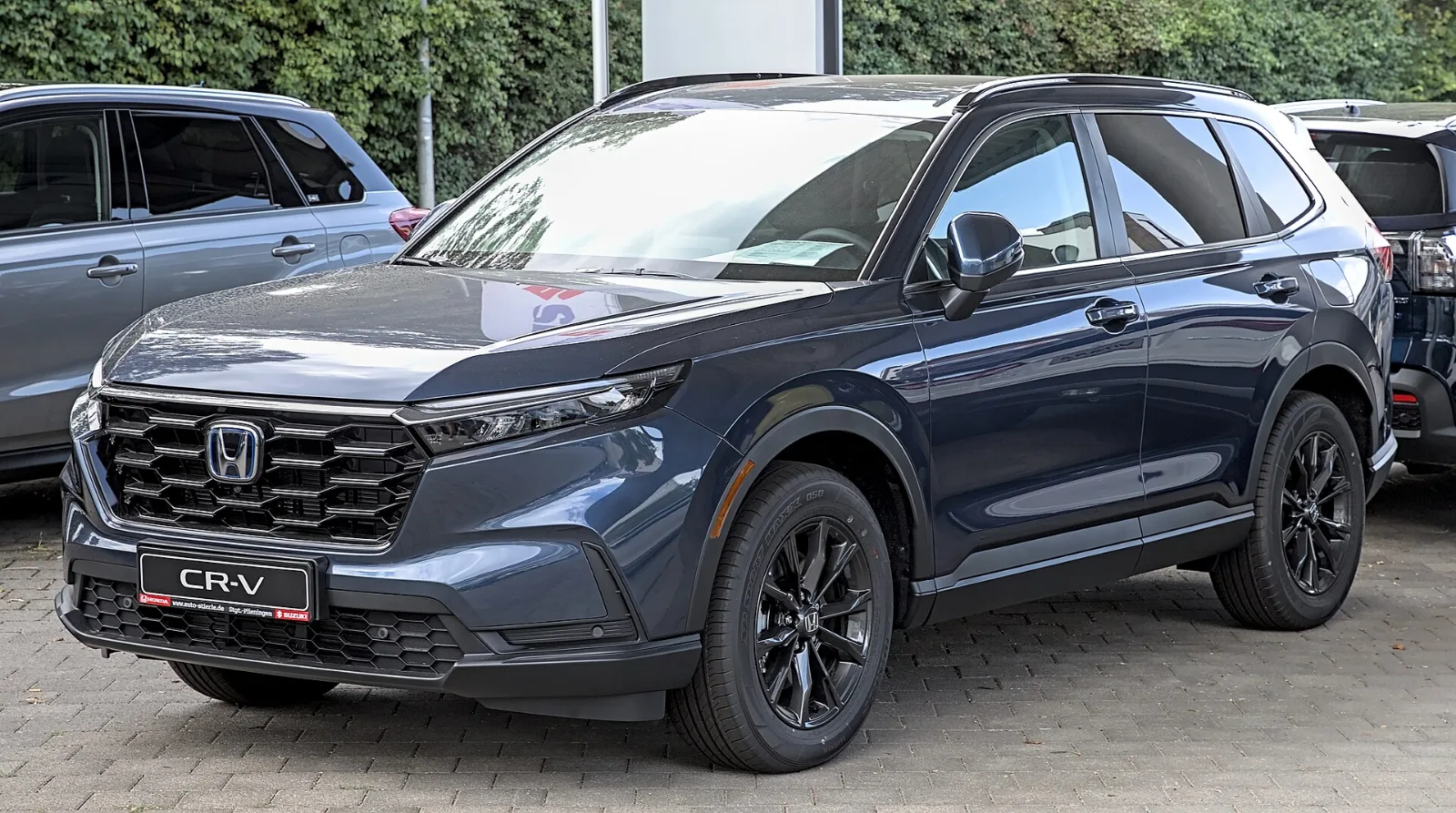
Honda now sells two family SUVs of similar size: the electric Prologue and the CR-V, which is offered as a hybrid in most trims. Delivered, the 2026 Prologue EX costs only $3,915 more than a 2027 CR-V Sport Hybrid. We added up ten years of payments, charging, gas, insurance, fees and resale to see whether the electric Honda pays for itself.
The short answer
At US-average costs, the CR-V Hybrid is about $7,150 cheaper to own over 10 years.
The price gap is small, but so is the fuel saving. The Prologue uses 32.5 kWh per 100 miles, which makes it less efficient than most rival EVs. It costs 7.3¢ a mile against 9.5¢ for the 40-mpg CR-V, saving only about $2,900 over 10 years. Lower expected resale value and higher insurance and fees cost it more than that. The Prologue only comes out ahead with cheap home charging, equal insurance and no state EV fee.
Prologue vs CR-V Hybrid: specs side by side
We compare the entry front-wheel-drive versions. A ✓ marks the better figure.
| Spec | 2026 Honda Prologue EX FWD | 2027 Honda CR-V Sport Hybrid FWD |
|---|---|---|
| Price incl. destination | $41,495 ($39,900 + $1,595) | $37,580 ($36,030 + $1,550) |
| Powertrain | Battery electric, front-wheel drive (AWD available) | 2.0-liter hybrid, front-wheel drive (AWD available) |
| EPA efficiency | 104 MPGe combined (113 city / 94 hwy) | 40 mpg combined (43 city / 36 hwy) |
| Range | 308 miles (EPA) | Refuel anywhere in minutes |
| Built by | GM, on the same platform as the Chevrolet Blazer EV | Honda |
| Energy cost per mile* | 7.3¢ | 9.5¢ |
| 10-year cost of ownership* | $83,287 | $76,134 |
*US averages: 12,000 miles a year, home electricity at 18¢/kWh with 15% public fast charging at 48¢/kWh, gasoline at $3.81/gal, both financed with 10% down at 7% APR over 60 months. Full assumptions are in the methodology section.
Price: $3,915 apart, $69 a month
Honda lists the 2026 Prologue EX at $39,900 plus a $1,595 destination charge, or $41,495. The 2027 CR-V Sport Hybrid lists at $36,030; with the $1,550 destination charge reported for the 2027 CR-V, it costs $37,580. Financed with 10% down at 7% over five years, that’s $739 a month for the Prologue and $670 for the CR-V.
The $7,500 federal EV tax credit ended for vehicles acquired after September 30, 2025, so it no longer helps the Prologue.
Running costs: the Prologue saves about $260 a year
At the EPA’s 32.5 kWh per 100 miles, the Prologue uses about 3,900 kWh for 12,000 miles. At 18¢/kWh at home, with 15% of charging at public fast chargers, that costs about $879 in year one, or 5.9¢ a mile with home charging only. The CR-V Hybrid needs about 300 gallons, or about $1,143 at $3.81 a gallon.
Over ten years, with prices rising 2% a year, energy costs $9,622 for the Prologue and $12,516 for the CR-V, a saving of about $2,900. For comparison, the more efficient Tesla Model Y (25 kWh/100 mi) would use about a quarter less electricity for the same miles.
10-year cost of ownership, line by line
| Cost over 10 years | Prologue EX | CR-V Sport Hybrid |
|---|---|---|
| Purchase price | $41,495 | $37,580 |
| Loan interest (7%, 60 mo) | $7,024 | $6,361 |
| Charging / gasoline | $9,622 | $12,516 |
| Maintenance | $7,000 | $9,000 |
| Insurance | $23,000 | $20,000 |
| Registration & EV fees | $2,200 | $1,200 |
| Resale after 10 years | −$7,054 (17%) | −$10,522 (28%) |
| Total cost of ownership | $83,287 | $76,134 |
Run it with your own rates
The calculator opens with this article’s figures. Enter your electricity rate, gas price, insurance quotes and mileage to see which Honda costs less for you.
Eight scenarios
We changed one thing at a time and kept everything else at the US averages.
| Scenario | Prologue | CR-V Hybrid | Cheaper |
|---|---|---|---|
| US average (12,000 mi/yr) | $83,287 | $76,134 | CR-V by $7,153 |
| High mileage (15,000 mi/yr) | $85,692 | $79,263 | CR-V by $6,429 |
| California (32.6¢/kWh, $5.57/gal) | $88,586 | $81,903 | CR-V by $6,683 |
| Nevada (13.4¢/kWh, $4.90/gal) | $81,600 | $79,704 | CR-V by $1,896 |
| Cheap overnight rate (12¢/kWh, 95% home) | $79,566 | $76,134 | CR-V by $3,432 |
| Prologue keeps 28% resale, like the CR-V | $78,722 | $76,134 | CR-V by $2,588 |
| Keep it 5 years, not 10 | $51,764 | $45,072 | CR-V by $6,692 |
| Cheap charging, equal insurance, no EV fee* | $75,566 | $76,134 | Prologue by $568 |
*12¢/kWh overnight charging for 95% of miles, the same insurance cost as the CR-V and no state EV registration fee. At 15,000 miles a year in that scenario, the Prologue wins by $2,222. Nevada and California prices: EIA residential average for January–August 2026 and AAA state averages on 16 November 2026.
What would make the Prologue the better buy
- A discount of about $7,000: at US-average running costs, the Prologue ties with the CR-V Hybrid at about $34,300. Honda and its dealers have often offered Prologue lease and finance deals, so compare real offers.
- Cheap home charging: 12¢/kWh for 95% of charging cuts about $3,700 from the Prologue’s 10-year cost.
- Insurance and registration: we assumed $300 a year more to insure the EV and $100 a year more to register it. If your quotes and state fees are the same for both, that’s $4,000 back.
- Leasing: a lease passes the resale risk to the lender, which removes the Prologue’s biggest disadvantage in our numbers.
Pros and cons
2026 Honda Prologue
What we like
- Only $69 a month more than a CR-V Hybrid on a loan
- 308-mile EPA range in FWD form
- Lower running and maintenance costs
- Comes out ahead with cheap charging and normal insurance
- Quiet, smooth electric drive
Watch out for
- About $7,150 more than the CR-V Hybrid over 10 years at average prices
- Less efficient than many EVs (32.5 kWh/100 mi)
- No federal tax credit since September 30, 2025
- EVs typically lose value faster
2027 Honda CR-V Sport Hybrid
What we like
- Lowest 10-year cost in seven of our eight scenarios
- 40 mpg combined (FWD)
- $3,915 cheaper to buy
- No charging needed
- Strong resale history
Watch out for
- Buys about 300 gallons of gas a year
- Costs about 30% more per mile to run
- Routine engine maintenance
- Narrowly loses with cheap charging, equal insurance and no EV fee
Which one should you buy?
Buy the Prologue if…
- You can charge at home on an off-peak rate
- You can get a strong discount or lease deal
- Your insurance quote matches the CR-V’s
- You want an EV with a long range for the price
Buy the CR-V Hybrid if…
- The lowest total cost matters most
- You can’t charge at home
- You plan to keep the car 10 years or more
- You drive long distances often
FAQ
Is the Honda Prologue cheaper to own than a CR-V Hybrid?
At US-average prices, no. Our 10-year estimate is $83,287 for the Prologue EX FWD and $76,134 for the CR-V Sport Hybrid. With 12¢/kWh home charging, equal insurance and no state EV fee, the Prologue is $568 cheaper.
How much does it cost to charge a Honda Prologue?
At the EPA’s 32.5 kWh per 100 miles and 18¢/kWh, about 5.9¢ a mile at home, or 7.3¢ a mile with some public fast charging. That’s about $879 a year for 12,000 miles.
What mpg does the CR-V Hybrid get?
The EPA rates the front-wheel-drive CR-V hybrid at 40 mpg combined (43 city, 36 highway) and the AWD version at 37 mpg.
Who builds the Honda Prologue?
General Motors builds the Prologue for Honda. It shares its platform with the Chevrolet Blazer EV.
Does the Prologue still get the $7,500 tax credit?
No. The federal clean vehicle credit ended for vehicles acquired after September 30, 2025. Check state and utility rebates.
How we compared them
This is a data-led ownership-cost comparison, not a road test. We haven’t driven these vehicles for this article.
- Prices: Honda lists the 2026 Prologue at $39,900 plus a $1,595 destination charge (automobiles.honda.com, checked 17 November 2026). The 2027 CR-V Sport Hybrid is $36,030 on Honda’s site; the $1,550 destination charge is as reported by CarWhere and Plaza Honda for the 2027 CR-V.
- Efficiency and range: EPA ratings on fueleconomy.gov. 2026 Prologue FWD: 104 MPGe, 32.5 kWh/100 mi, 308 miles. CR-V hybrid FWD: 40 mpg combined.
- Energy prices: gasoline $3.81/gal (AAA national average, 16 November 2026); home electricity 18¢/kWh (EIA US residential average); public fast charging 48¢/kWh for 15% of charging. Both rise 2% a year.
- Financing: 10% down, 7% APR, 60 months.
- Estimates (replace them with your own quotes): insurance $2,300 a year for the EV and $2,000 for the hybrid; maintenance $700 and $900 a year; registration $220 a year for the EV (including a typical state EV fee) and $120 for the hybrid; resale after 10 years 17% for the EV and 28% for the hybrid.
Sources: Honda: 2026 Prologue · Honda: 2027 CR-V · CarWhere: 2027 CR-V prices · fueleconomy.gov: Honda · AAA
Faisal is the founder and editor of EV vs Gas Car Cost. He builds the site’s ownership-cost calculators and reviews new cars with one question in mind: what will this car really cost to buy, finance, fuel and run? His reviews are based on manufacturer specifications, official fuel-economy and efficiency ratings, and public fuel and electricity price data, which he cites in every article. He also publishes daily car review videos on his YouTube channel, CarRev3.