Hyundai Ioniq 5 vs. Tucson Hybrid: Which Costs Less Over 10 Years?
The 2027 Ioniq 5 now costs only $4,000 more than a Tucson Hybrid. At average US prices the hybrid is still about $5,000 cheaper over 10 years, but with cheap home charging the Ioniq 5 wins. Here are the numbers.

In this article
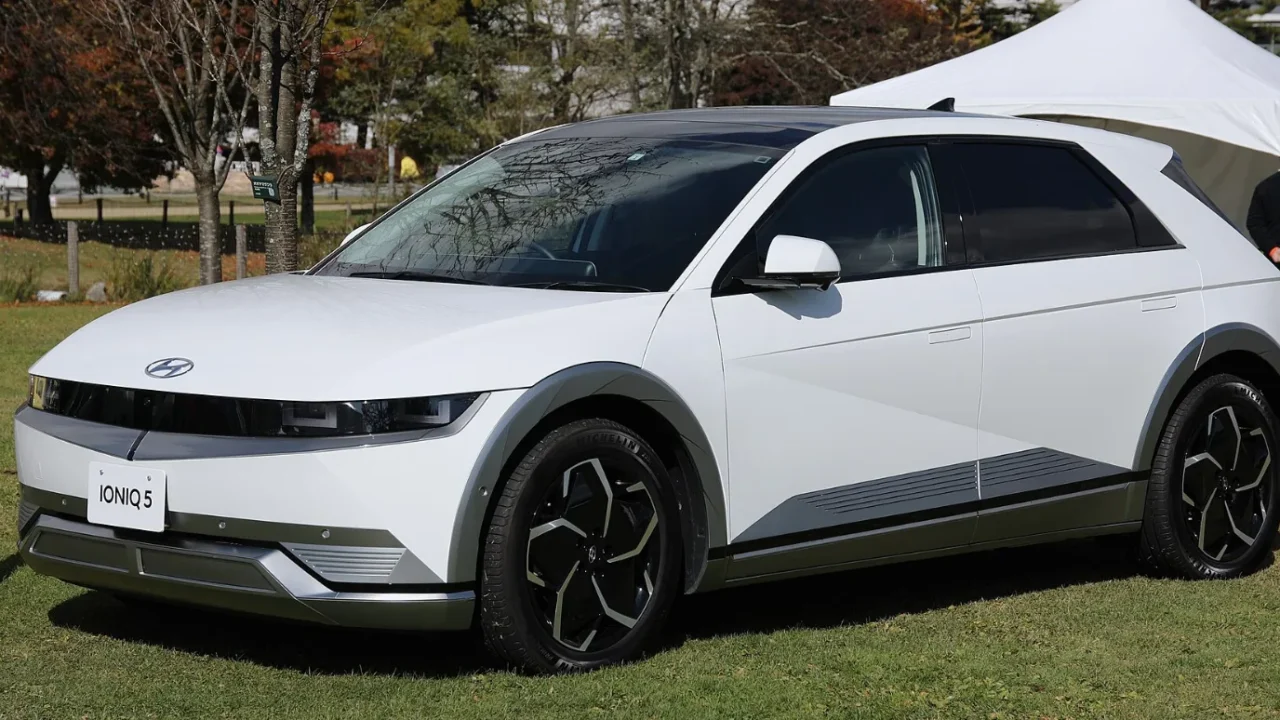
Walk into a Hyundai showroom for a compact SUV and you’ll face this choice: the electric Ioniq 5 or the Tucson Hybrid. The 2027 Ioniq 5 now starts at $35,250, only $3,950 more than the 2026 Tucson Hybrid SE. That makes it one of the closest EV-versus-hybrid races we’ve run. We added up ten years of payments, charging, gas, insurance, fees and resale with November 2026 prices.
The short answer
At US-average costs, the Tucson Hybrid is about $5,000 cheaper over 10 years. With cheap home charging, the Ioniq 5 can win.
The Ioniq 5 saves about $4,600 on energy over 10 years: it costs 6.5¢ a mile against 10.0¢ for the 38-mpg Tucson. That’s not quite enough to cover its higher price, insurance and fees, plus lower expected resale. But with off-peak charging, normal insurance and no state EV fee, the Ioniq 5 comes out $2,300 ahead. It already edges ahead in Nevada at average prices.
Ioniq 5 vs Tucson Hybrid: specs side by side
We compare the cheapest versions of each. A ✓ marks the better figure.
| Spec | 2027 Hyundai Ioniq 5 SE Standard Range | 2026 Hyundai Tucson Hybrid SE FWD |
|---|---|---|
| Price incl. freight | $36,900 ($35,250 + $1,650) | $32,900 ($31,300 + $1,600) |
| Powertrain | Battery electric, rear-wheel drive | 1.6-liter turbo hybrid, front-wheel drive |
| EPA efficiency | 115 MPGe combined (29 kWh/100 mi) | 38 mpg combined (40 city / 35 hwy) |
| Range | 245 miles (EPA) | Refuel anywhere in minutes |
| Longer-range option | Ioniq 5 SE: 318 miles, $39,400 with freight | Tucson Hybrid SEL from $32,750 before freight |
| Energy cost per mile* | 6.5¢ | 10.0¢ |
| 10-year cost of ownership* | $77,646 | $72,631 |
*US averages: 12,000 miles a year, home electricity at 18¢/kWh with 15% public fast charging at 48¢/kWh, gasoline at $3.81/gal, both financed with 10% down at 7% APR over 60 months. Full assumptions are in the methodology section.
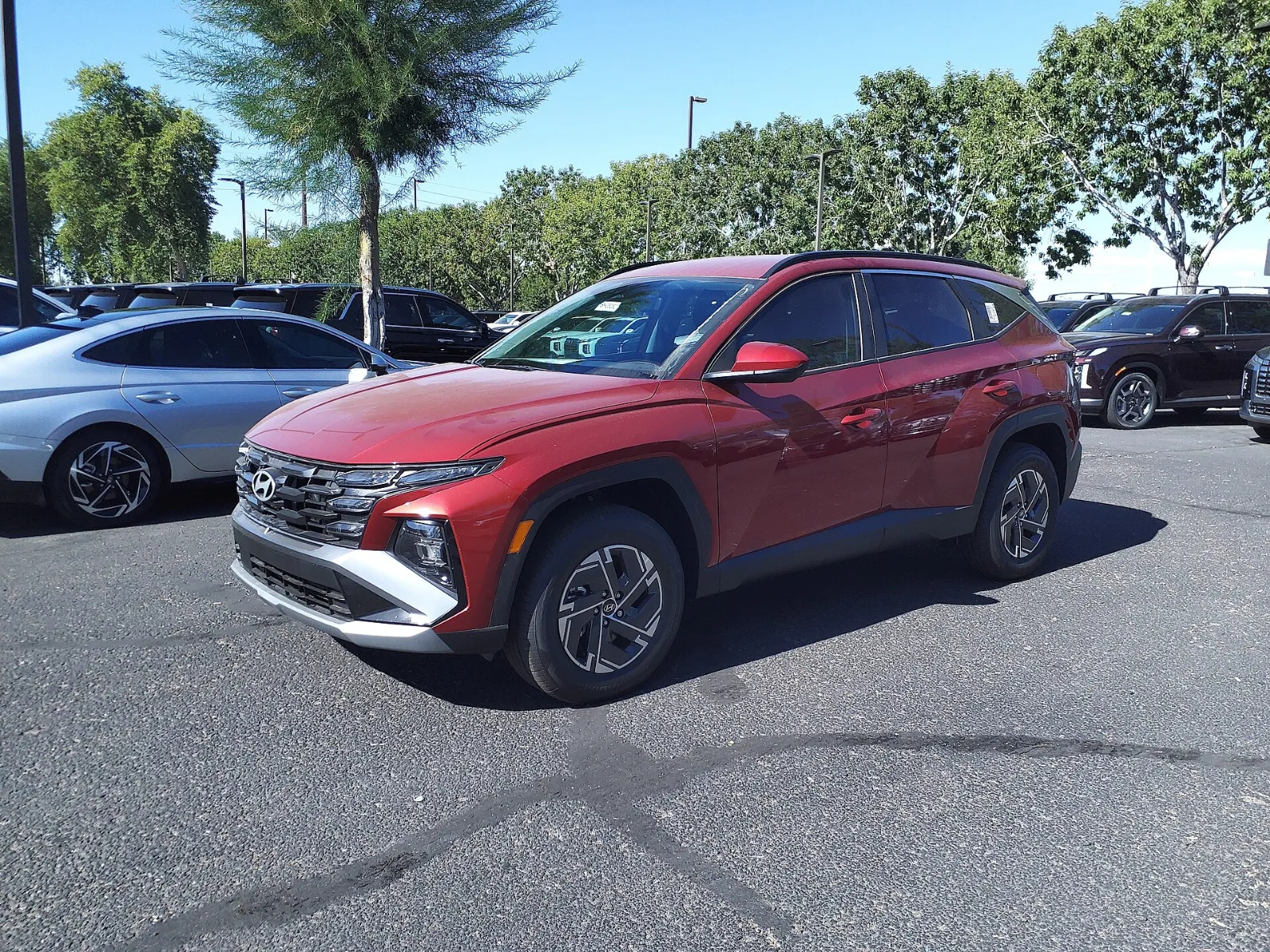
Price: only $4,000 apart
Hyundai lists the 2027 Ioniq 5 SE Standard Range at $35,250 and the 2026 Tucson Hybrid SE at $31,300, both before freight. With freight of $1,650 for the Ioniq 5 and $1,600 for the Tucson, the delivered prices are $36,900 and $32,900.
That $4,000 gap is small for an EV against a hybrid. The Tesla Model Y costs $8,280 more than a RAV4 Hybrid. Financed with 10% down at 7% over five years, the Ioniq 5 costs $658 a month against $586, only $72 more. The $7,500 federal tax credit ended for vehicles acquired after September 30, 2025.
Running costs: the Ioniq 5 saves about $420 a year
At the EPA’s 29 kWh per 100 miles, the Ioniq 5 uses about 3,480 kWh for 12,000 miles. At 18¢/kWh at home, with 15% of charging at public fast chargers, that costs about $783 in year one. Charging only at home costs 5.2¢ a mile. The Tucson Hybrid needs about 316 gallons, or about $1,203 at $3.81 a gallon.
Over ten years, with prices rising 2% a year, energy costs $8,574 for the Ioniq 5 and $13,174 for the Tucson. Add about $2,000 of maintenance savings, and the EV recovers most of its price premium.
10-year cost of ownership, line by line
| Cost over 10 years | Ioniq 5 SE SR | Tucson Hybrid SE |
|---|---|---|
| Purchase price | $36,900 | $32,900 |
| Loan interest (7%, 60 mo) | $6,246 | $5,569 |
| Charging / gasoline | $8,574 | $13,174 |
| Maintenance | $7,000 | $9,000 |
| Insurance | $23,000 | $20,000 |
| Registration & EV fees | $2,200 | $1,200 |
| Resale after 10 years | −$6,273 (17%) | −$9,212 (28%) |
| Total cost of ownership | $77,646 | $72,631 |
The longer-range Ioniq 5 SE (318 miles, $39,400 delivered) totals $80,440, or $7,809 more than the Tucson, with a $702 monthly payment.
Is the Ioniq 5 cheaper where you live?
The calculator opens with this article’s figures. Enter your own electricity rate, gas price, insurance quotes and mileage.
Eight scenarios: when the Ioniq 5 wins
We changed one thing at a time and kept everything else at the US averages.
| Scenario | Ioniq 5 | Tucson Hybrid | Cheaper |
|---|---|---|---|
| US average (12,000 mi/yr) | $77,646 | $72,631 | Tucson by $5,015 |
| High mileage (15,000 mi/yr) | $79,790 | $75,925 | Tucson by $3,865 |
| California (32.6¢/kWh, $5.57/gal) | $82,369 | $78,704 | Tucson by $3,665 |
| Nevada (13.4¢/kWh, $4.90/gal) | $76,144 | $76,389 | Ioniq 5 by $245 |
| Cheap overnight rate (12¢/kWh, 95% home) | $74,331 | $72,631 | Tucson by $1,700 |
| Ioniq 5 keeps 28% resale, like the Tucson | $73,587 | $72,631 | Tucson by $956 |
| Keep it 5 years, not 10 | $47,823 | $42,393 | Tucson by $5,430 |
| Cheap charging, equal insurance, no EV fee* | $70,331 | $72,631 | Ioniq 5 by $2,300 |
*12¢/kWh overnight charging for 95% of miles, the same insurance cost as the Tucson and no state EV registration fee. At 15,000 miles a year in that scenario, the Ioniq 5 wins by $4,279 and pays back its higher price in about 19 months. Nevada and California prices: EIA residential average for January–August 2026 and AAA state averages on 16 November 2026.
What tips it toward the Ioniq 5
- An off-peak EV rate: charging at home 95% of the time at 12¢/kWh instead of 18¢ saves about $3,300 over ten years.
- Insurance and registration: we assumed the EV costs $300 a year more to insure and $100 a year more to register. If your quotes and your state’s fees match the Tucson’s, that’s $4,000 back.
- Price: at US-average running costs, the Ioniq 5 ties at about $31,900, so a discount of around $5,000 would close the gap. Every dollar of dealer discount counts in full.
- Resale: if the Ioniq 5 holds value like the Tucson, the gap shrinks to under $1,000.
Pros and cons
2027 Hyundai Ioniq 5
What we like
- Only $72 a month more than the Tucson Hybrid on a loan
- Saves about $4,600 on energy over 10 years
- Wins with cheap home charging
- Longer-range SE gets 318 miles
- No oil changes
Watch out for
- About $5,000 more than the Tucson over 10 years at average prices
- 245-mile range on the base model
- No federal tax credit since September 30, 2025
- EVs typically lose value faster
2026 Hyundai Tucson Hybrid
What we like
- Lowest 10-year cost at US-average prices
- 38 mpg combined in the FWD SE
- $4,000 cheaper to buy
- No charging needed
- Strong resale for a hybrid
Watch out for
- Buys about 316 gallons of gas a year
- Costs over 50% more per mile to run
- Loses to the Ioniq 5 with cheap home charging
- Routine engine maintenance
Which one should you buy?
Buy the Ioniq 5 if…
- You can charge at home on an off-peak or solar rate
- You drive 12,000 miles a year or more
- Your insurance quote is close to the Tucson’s
- You live where power is cheap and gas is expensive, such as Nevada or Washington
Buy the Tucson Hybrid if…
- You can’t charge at home
- You pay standard or high electricity rates
- You want the lowest price and payment
- You often drive long distances without planned stops
FAQ
Is the Ioniq 5 cheaper to own than the Tucson Hybrid?
At US-average prices, no: our 10-year estimate is $77,646 for the Ioniq 5 SE Standard Range and $72,631 for the Tucson Hybrid SE. With 12¢/kWh home charging, equal insurance and no state EV fee, the Ioniq 5 is $2,300 cheaper.
How much does it cost to charge a Hyundai Ioniq 5?
At the EPA’s 29 kWh per 100 miles and 18¢/kWh, about 5.2¢ a mile at home, or 6.5¢ a mile with some public fast charging. That’s about $783 a year for 12,000 miles.
What mpg does the 2026 Tucson Hybrid get?
The EPA rates the front-wheel-drive 2026 Tucson Hybrid at 38 mpg combined (40 city, 35 highway).
How much is the 2027 Ioniq 5?
Hyundai lists the SE Standard Range from $35,250 and the longer-range SE from $37,750, before a $1,650 freight charge.
Does the Ioniq 5 qualify for a tax credit?
Not the federal one: the $7,500 clean vehicle credit ended for vehicles acquired after September 30, 2025. Some states and utilities still offer rebates.
How we compared them
This is a data-led ownership-cost comparison, not a road test. We haven’t driven these vehicles for this article.
- Prices: Hyundai lists the 2027 Ioniq 5 SE Standard Range at $35,250 and the 2026 Tucson Hybrid SE at $31,300 (hyundaiusa.com, checked 17 November 2026). Freight: $1,650 for the 2027 Ioniq 5 as reported by Cars.com, and $1,600 for the Tucson Hybrid as reported by U.S. News.
- Efficiency and range: EPA ratings on fueleconomy.gov. Ioniq 5 Standard Range: 115 MPGe, 29 kWh/100 mi, 245 miles. Ioniq 5 RWD long range: 30 kWh/100 mi, 318 miles. Tucson Hybrid FWD: 38 mpg combined.
- Energy prices: gasoline $3.81/gal (AAA national average, 16 November 2026); home electricity 18¢/kWh (EIA US residential average); public fast charging 48¢/kWh for 15% of charging. Both rise 2% a year.
- Financing: 10% down, 7% APR, 60 months.
- Estimates (replace them with your own quotes): insurance $2,300 a year for the EV and $2,000 for the hybrid; maintenance $700 and $900 a year; registration $220 a year for the EV (including a typical state EV fee) and $120 for the hybrid; resale after 10 years 17% for the EV and 28% for the hybrid.
Sources: Hyundai: 2027 Ioniq 5 · Hyundai: 2026 Tucson Hybrid · Cars.com: 2027 Ioniq 5 pricing · U.S. News: Tucson Hybrid · fueleconomy.gov: Hyundai · AAA
Faisal is the founder and editor of EV vs Gas Car Cost. He builds the site’s ownership-cost calculators and reviews new cars with one question in mind: what will this car really cost to buy, finance, fuel and run? His reviews are based on manufacturer specifications, official fuel-economy and efficiency ratings, and public fuel and electricity price data, which he cites in every article. He also publishes daily car review videos on his YouTube channel, CarRev3.