Tata Nexon EV vs. Petrol vs. CNG: Which Is Cheapest to Own Over 10 Years?
Same body, three fuels. At Delhi prices the Nexon EV runs for ₹1.49 a km against ₹4.48 for CNG and ₹7.29 for petrol, and pays no road tax. Over 10 years it is about ₹5.1 lakh cheaper than the petrol and ₹2.7 lakh cheaper than the CNG. Here's when CNG wins.

In this article
- Nexon EV vs petrol vs CNG: the key numbers
- Price: the EV costs more, until road tax
- Running costs: ₹1.49 vs ₹4.48 vs ₹7.29 a km
- 10-year cost of ownership, line by line
- Scenarios: when does CNG or petrol win?
- What if you just want the cheapest Nexon?
- Pros and cons
- Which Nexon should you buy?
- FAQ
- How we compared them
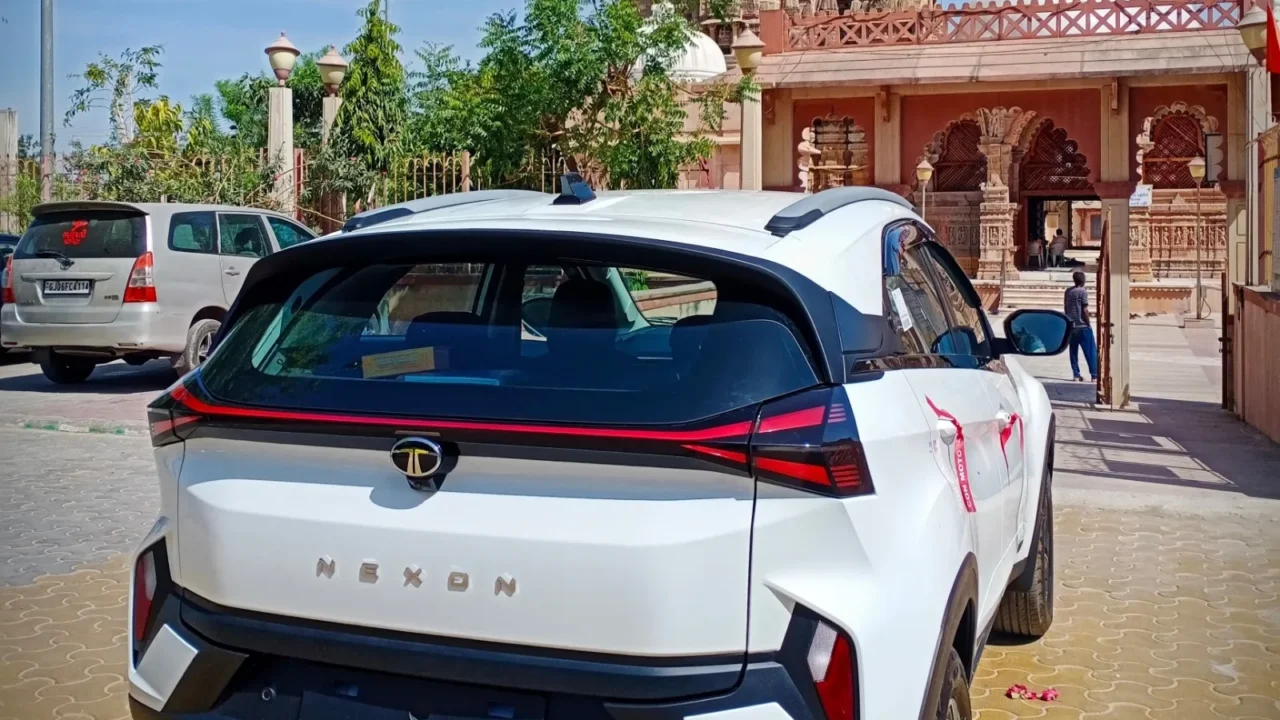
The Tata Nexon is the rare car you can buy with a petrol engine, a CNG kit or a battery, all with the same body. That makes it the cleanest test of which fuel is cheapest to own in India. We compared the Nexon EV, the 1.2 turbo-petrol and the twin-cylinder iCNG over ten years, using Delhi prices from November 2026: loan EMIs, electricity, petrol, CNG, servicing, insurance, road tax and resale value.
The short answer
In Delhi, the Nexon EV is about ₹5.1 lakh cheaper than the petrol Nexon and ₹2.7 lakh cheaper than the CNG over 10 years.
The EV costs about ₹1.49 a km to run with some public charging, against ₹4.48 for CNG and ₹7.29 for petrol. It also pays no road tax in Delhi, while the petrol and CNG versions pay 10%. Against petrol, the EV wins in every scenario we tried. Against CNG, the margin is thinner: if EVs hold little resale value and the CNG matches its ARAI figure, CNG comes out ahead.
Nexon EV vs petrol vs CNG: the key numbers
The EV range starts at the Creative+ trim, so we compare it with the petrol and CNG Creative variants, the closest match on price and equipment. A ✓ marks the best figure.
| Spec | Nexon EV Creative+ MR | Nexon petrol Creative MT | Nexon iCNG Creative MT |
|---|---|---|---|
| Ex-showroom (Delhi) | ₹12.49 lakh | ₹10.17 lakh | ₹11.22 lakh |
| Delhi road tax | Nil (Delhi EV Policy 2026) | 10% (about ₹1.02 lakh) | 10% (about ₹1.12 lakh) |
| Powertrain | 30 kWh battery | 1.2 turbo-petrol, manual | 1.2 turbo-petrol + CNG, manual |
| Claimed efficiency | 275 km range (MIDC) | 17.44 km/l (ARAI) | 24 km/kg (ARAI) |
| Real-world figure we used | 7 km per kWh from the socket | 14 km/l | 19.4 km/kg (Autocar India test) |
| Running cost per km* | ₹1.49 | ₹7.29 | ₹4.48 |
| 10-year cost of ownership* | ₹19.07 lakh | ₹24.14 lakh | ₹21.80 lakh |
*12,000 km a year in Delhi: home electricity ₹8/kWh with 20% of charging at public chargers for ₹20/kWh; petrol ₹102.12 a litre; CNG ₹86.98 a kg. All three financed with 20% down at 9% over 60 months. Full assumptions are in the methodology section.
Price: the EV costs more, until road tax
At ex-showroom prices, the Nexon EV Creative+ MR (₹12.49 lakh) is ₹2.32 lakh dearer than the petrol Creative and ₹1.27 lakh dearer than the CNG Creative. Delhi’s EV Policy 2026, in force since 1 July 2026, waives road tax and registration fees on electric cars up to ₹30 lakh until March 2030. Petrol and CNG cars above ₹10 lakh pay 10% road tax.
That shrinks the gap to about ₹1.30 lakh against petrol and only ₹15,000 against CNG. On a five-year loan with 20% down, the EMIs are ₹20,742 for the EV, ₹20,496 for the CNG and ₹18,578 for the petrol.
Running costs: ₹1.49 vs ₹4.48 vs ₹7.29 a km
Tata claims 275 km from the 30 kWh battery on the official test. Its own real-world “C75” estimate is about 230 km, as reported by Autocar India. We assumed 7 km per kWh measured at the wall, including charging losses. At ₹8 a unit at home, that’s ₹1.14 a km. With a fifth of charging at ₹20-a-unit public chargers, it’s ₹1.49 a km, or about ₹17,800 a year for 12,000 km.
The petrol Nexon’s ARAI figure is 17.44 km/l. We used 14 km/l for mixed real-world driving, which costs ₹7.29 a km, or about ₹87,500 a year. The CNG version is rated at 24 km/kg; Autocar India measured 19.4 km/kg in its real-world test. At Delhi’s ₹86.98 a kg, that’s ₹4.48 a km, or about ₹53,800 a year.
Over ten years, with prices rising 2% a year, the EV’s energy bill is ₹1.95 lakh, against ₹5.89 lakh for CNG and ₹9.58 lakh for petrol. See our cost-per-km guide for other cars.
10-year cost of ownership, line by line
| Cost over 10 years | Nexon EV | Nexon petrol | Nexon iCNG |
|---|---|---|---|
| Price incl. road tax | ₹12,49,000 | ₹11,18,700 | ₹12,34,200 |
| Loan interest (9%, 60 months) | ₹2,45,305 | ₹2,19,714 | ₹2,42,398 |
| Electricity / petrol / CNG | ₹1,95,218 | ₹9,58,445 | ₹5,89,118 |
| Servicing and maintenance | ₹60,000 | ₹1,20,000 | ₹1,20,000 |
| Insurance | ₹3,70,000 | ₹3,10,000 | ₹3,40,000 |
| Resale after 10 years | −₹2,12,330 (17%) | −₹3,13,236 (28%) | −₹3,45,576 (28%) |
| Total cost of ownership | ₹19,07,193 | ₹24,13,623 | ₹21,80,140 |
Insurance is the one running cost where the EV loses: premiums follow the car’s value, so we assumed about 3% of the price each year for all three. The EV’s higher price means a higher premium.
Try it with your own numbers
The India calculator opens with the EV vs petrol figures from this article. To check CNG instead, enter 19.4 in the km/l box and the CNG price per kg in the fuel-price box.
Scenarios: when does CNG or petrol win?
We changed one thing at a time. A positive figure means the EV is cheaper over ten years.
| Scenario | EV vs petrol | EV vs CNG |
|---|---|---|
| Base case (Delhi, 12,000 km a year) | EV by ₹5.06 lakh | EV by ₹2.73 lakh |
| 15,000 km a year | EV by ₹6.97 lakh | EV by ₹3.71 lakh |
| 20,000 km a year | EV by ₹10.15 lakh | EV by ₹5.36 lakh |
| Charge only at home (95%) | EV by ₹5.40 lakh | EV by ₹3.07 lakh |
| Ex-showroom only (no road tax for any) | EV by ₹4.13 lakh | EV by ₹1.70 lakh |
| Petrol/CNG match their ARAI figures | EV by ₹3.17 lakh | EV by ₹1.60 lakh |
| EV worth nothing after 10 years | EV by ₹2.94 lakh | EV by ₹61,000 |
| Keep it 5 years, not 10 | EV by ₹1.39 lakh | EV by ₹55,000 |
| Pay cash instead of a loan | EV by ₹5.32 lakh | EV by ₹2.76 lakh |
| Worst case for the EV: no resale, ARAI figures, no road-tax gap | EV by ₹12,000 | CNG by ₹1.55 lakh |
The EV would tie with the petrol Creative at about ₹17.4 lakh ex-showroom, and with the CNG Creative at about ₹15.1 lakh, at base-case running costs.
What if you just want the cheapest Nexon?
The cheapest petrol Nexon, the Smart MT, is ₹7.40 lakh ex-showroom, and the Smart CNG is ₹8.35 lakh. Both are much cheaper than the ₹12.49 lakh EV, though with less equipment. Leaving road tax out, our model still puts the EV about ₹69,000 ahead of the Smart petrol over ten years. But the Smart CNG is about ₹1.8 lakh cheaper than the EV. For a buyer on a tight budget who just needs transport, the base CNG Nexon is the value pick.
Pros and cons
Nexon EV
What we like
- Lowest 10-year cost at Delhi prices
- About ₹1.14 a km charging at home
- No road tax or registration fee in Delhi until March 2030
- The bigger your mileage, the bigger the saving
Watch out for
- Highest ex-showroom price of the three
- Real-world range around 230 km on the 30 kWh version
- Resale values for used EVs are still uncertain
- Needs reliable home charging to make sense
Nexon iCNG
What we like
- Running cost of about ₹4.48 a km
- Petrol back-up when CNG runs out
- Base Smart CNG is the cheapest way into a Nexon that’s cheap to run
- Holds value better than an EV in our model
Watch out for
- About ₹2.7 lakh more than the EV over 10 years (Creative trims)
- CNG prices in Delhi rose in 2026
- Queues at CNG stations in some cities
- Real-world 19.4 km/kg falls short of the 24 km/kg claim
Which Nexon should you buy?
Buy the Nexon EV if…
- You can charge at home or at work
- You drive 12,000 km a year or more
- You live in Delhi or another state that waives EV road tax
- Most of your trips are in and around the city
Buy the Nexon iCNG if…
- You can’t charge at home
- You want the lowest purchase price (Smart CNG)
- You often drive long highway trips
- There’s a CNG station near you with short queues
The petrol Nexon is the simplest choice, but on these numbers it is the most expensive to own. It makes most sense if you drive little, or can’t charge and have no CNG station nearby.
FAQ
Which is cheaper to run: Nexon EV, CNG or petrol?
The EV, at about ₹1.14 a km charging at home (₹1.49 with some public charging), against about ₹4.48 a km for CNG and ₹7.29 for petrol at Delhi prices and real-world efficiency.
Is the Nexon EV worth it over the CNG version?
In Delhi, at 12,000 km a year, the EV Creative+ MR is about ₹2.7 lakh cheaper than the iCNG Creative over ten years. The gap shrinks if you drive less, keep the car for only five years, or if used EV prices are very low.
Do electric cars pay road tax in Delhi?
No. Under the Delhi EV Policy 2026, electric cars with an ex-showroom price up to ₹30 lakh are exempt from road tax and registration fees until 31 March 2030.
What is the real-world mileage of the Nexon iCNG?
Autocar India recorded 15.1 km/kg in the city, 23.7 km/kg on the highway and 19.4 km/kg overall, against the ARAI figure of 24 km/kg.
How much does it cost to charge a Nexon EV at home?
At ₹8 a unit and about 7 km per kWh including charging losses, around ₹1.14 a km, or about ₹13,700 a year for 12,000 km if you charge only at home.
How we compared them
This is a data-led ownership-cost comparison, not a road test. We haven’t driven these cars for this article.
- Prices: ex-showroom Delhi, November 2026, as listed by CarDekho and Autocar India: Nexon EV Creative+ MR ₹12.49 lakh; Nexon 1.2 petrol Creative MT ₹10.17 lakh; Nexon iCNG Creative ₹11.22 lakh; Smart petrol ₹7.40 lakh; Smart CNG ₹8.35 lakh.
- Road tax: Delhi EV Policy 2026 (EVs up to ₹30 lakh exempt until March 2030); 10% of the ex-showroom price for private petrol cars above ₹10 lakh, as listed by Policybazaar and others. We applied the same rate to the CNG version; confirm the current rate with the Delhi Transport Department.
- Efficiency: EV 7 km per kWh from the socket, our estimate based on Tata’s real-world (C75) range of about 230 km for the 30 kWh version, as reported by Autocar India. Petrol 14 km/l, our estimate against the ARAI 17.44 km/l. CNG 19.4 km/kg (Autocar India test, September 2026) against the ARAI 24 km/kg.
- Energy prices: petrol ₹102.12 a litre (Delhi, November 2026); CNG ₹86.98 a kg (IGL, from 29 August 2026); home electricity ₹8 a unit, public charging ₹20 a unit for 20% of charging. All rise 2% a year.
- Financing: 20% down, 9% interest, 60 months.
- Estimates (replace them with your own quotes): insurance about 3% of the price a year (₹37,000 EV, ₹31,000 petrol, ₹34,000 CNG); maintenance ₹6,000 a year for the EV and ₹12,000 for petrol and CNG; resale after 10 years 17% for the EV and 28% for petrol and CNG.
Sources: CarDekho: Nexon EV variants · CarDekho: Nexon variants · Autocar India: Nexon iCNG fuel economy tested · Autocar India: Nexon EV range FAQs · Autocar India: Tata Nexon · Policybazaar: Delhi road tax · Business Today: Delhi EV Policy 2026 explained
Faisal is the founder and editor of EV vs Gas Car Cost. He builds the site’s ownership-cost calculators and reviews new cars with one question in mind: what will this car really cost to buy, finance, fuel and run? His reviews are based on manufacturer specifications, official fuel-economy and efficiency ratings, and public fuel and electricity price data, which he cites in every article. He also publishes daily car review videos on his YouTube channel, CarRev3.