Hyundai Ioniq 9 vs. Palisade Hybrid: Which Three-Row SUV Costs Less to Own?
The Ioniq 9 costs $14,395 more than a Palisade Hybrid, and the 34-mpg hybrid is cheap to fuel for its size. Over 10 years the Palisade Hybrid is about $17,700 cheaper at US averages and wins every scenario we tested. Here's what it would take for the Ioniq 9 to catch up.

In this article
- Ioniq 9 vs Palisade Hybrid: specs side by side
- Price: a $14,395 gap
- Running costs: the Ioniq 9 saves about $350 a year
- 10-year cost of ownership, line by line
- Nine scenarios: the Palisade Hybrid wins them all
- What it would take for the Ioniq 9 to win
- Pros and cons
- Which one should you buy?
- FAQ
- How we compared them
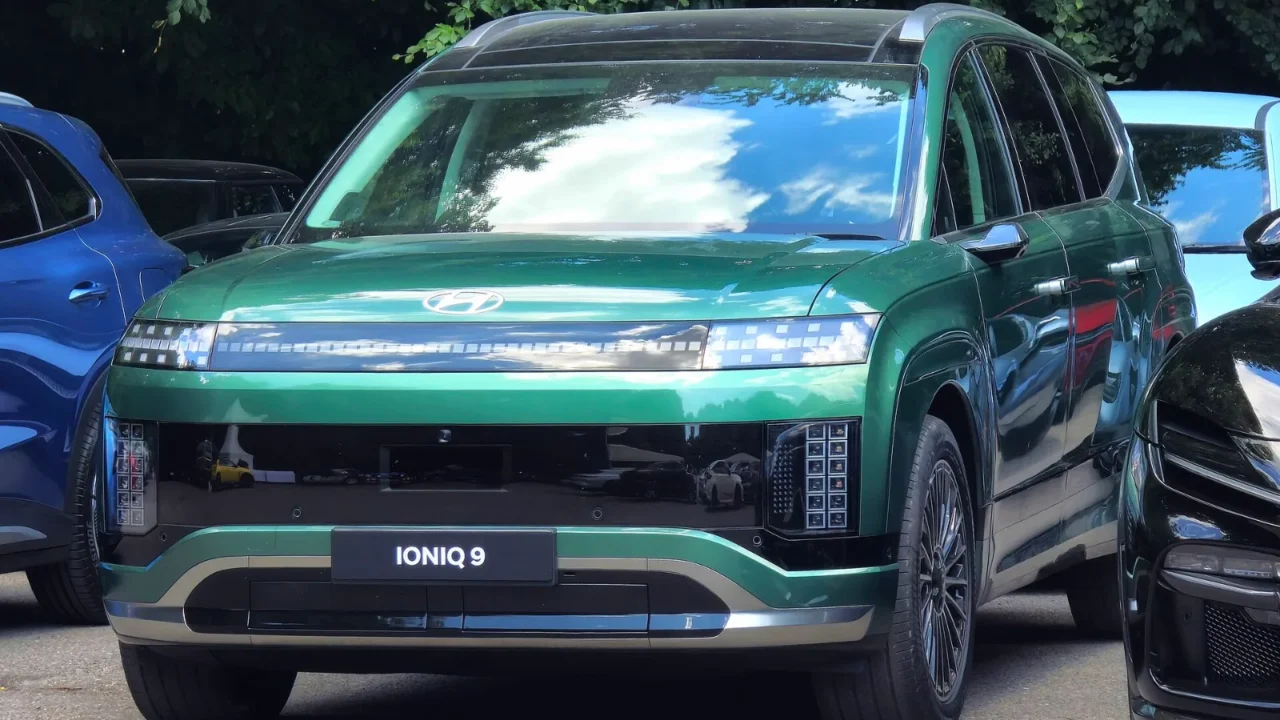
Hyundai now sells two three-row family SUVs that don’t need much gas: the electric Ioniq 9 and the new Palisade Hybrid. They’re close in size, but the Ioniq 9 costs $14,395 more, and the 34-mpg Palisade Hybrid is unusually efficient for a vehicle this big. We added up ten years of payments, charging, gas, insurance, fees and resale with November 2026 prices.
The short answer
The Palisade Hybrid is about $17,700 cheaper over 10 years at US-average costs, and it wins every scenario we tested.
The Ioniq 9 does cost less to run: 8.3¢ a mile against 11.2¢, saving about $3,800 on energy over 10 years. But that’s small next to its $14,395 higher price and the extra $2,400 of loan interest. Even with cheap home charging, equal insurance and no EV fee, the Palisade Hybrid stays $9,447 ahead. Buy the Ioniq 9 because you want an electric three-row SUV, not to save money, unless you find a large discount.
Ioniq 9 vs Palisade Hybrid: specs side by side
We compare the cheapest version of each. A ✓ marks the better figure.
| Spec | 2026 Hyundai Ioniq 9 S RWD | 2027 Hyundai Palisade Hybrid SEL FWD |
|---|---|---|
| Price incl. freight | $60,555 ($58,955 + $1,600) | $46,160 ($44,560 + $1,600) |
| Powertrain | Battery electric, rear-wheel drive, 215 hp | 2.5-liter turbo hybrid, front-wheel drive, 329 hp |
| EPA efficiency | 92 MPGe combined (37 kWh/100 mi) | 34 mpg combined (33 city / 35 hwy) |
| Range | 335 miles (EPA) | Up to 619 miles per tank (Hyundai) |
| Fast charging | 10–80% in 24 minutes (Hyundai) | Not applicable |
| Energy cost per mile* | 8.3¢ | 11.2¢ |
| 10-year cost of ownership* | $103,649 | $85,973 |
*US averages: 12,000 miles a year, home electricity at 18¢/kWh with 15% public fast charging at 48¢/kWh, gasoline at $3.81/gal, both financed with 10% down at 7% APR over 60 months. Full assumptions are in the methodology section.
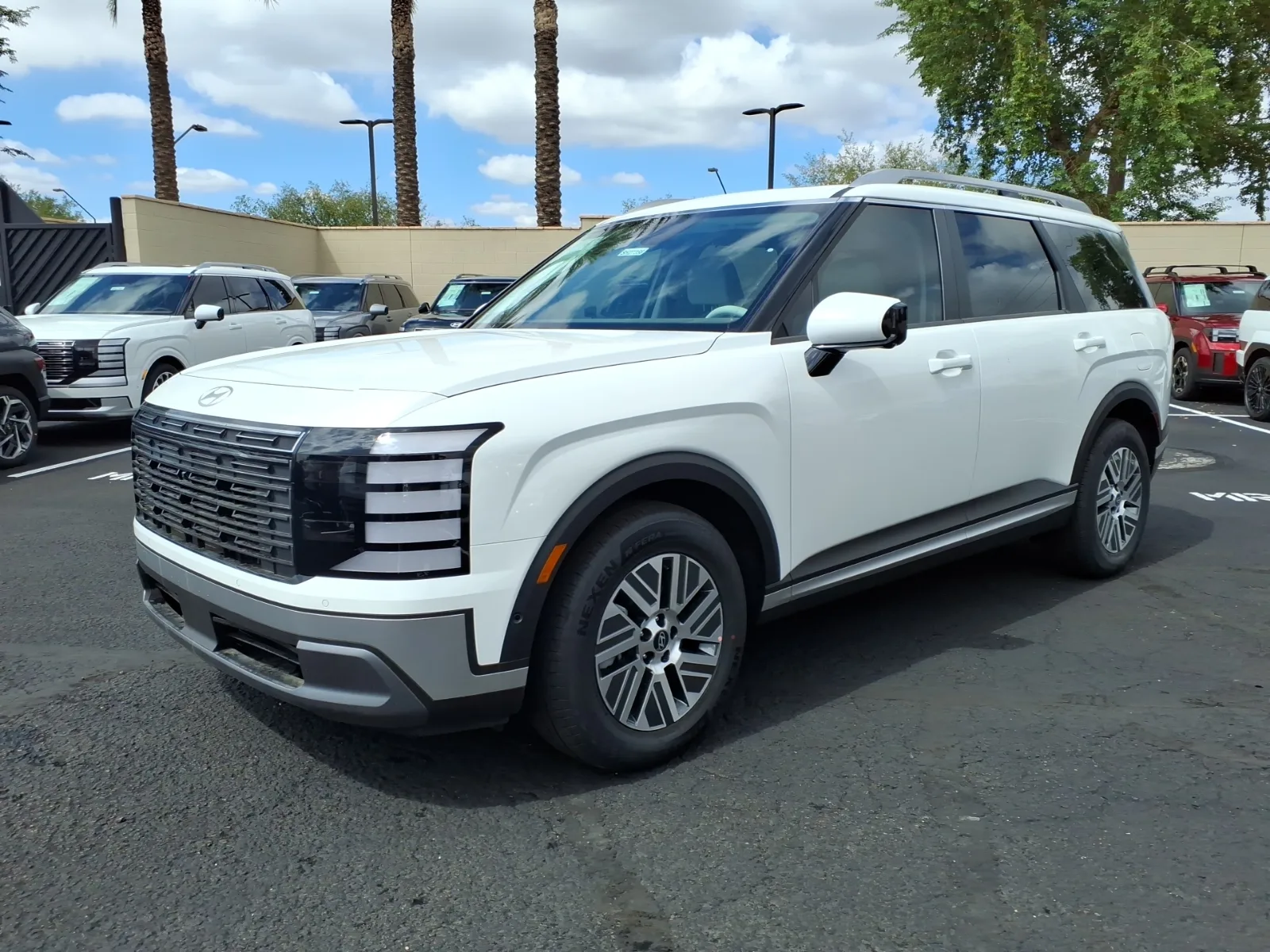
Price: a $14,395 gap
Hyundai lists the 2026 Ioniq 9 S at $58,955 and the 2027 Palisade Hybrid SEL at $44,560, both before freight. With $1,600 freight on each, the delivered prices are $60,555 and $46,160.
Financed with 10% down at 7% over five years, the Ioniq 9 costs $1,079 a month against $823, or $256 more. It also adds about $2,400 of loan interest. The $7,500 federal tax credit ended for vehicles acquired after September 30, 2025.
Both are true three-row SUVs. The Ioniq 9 S seats seven with a second-row bench, and Hyundai says the Palisade Hybrid has room for up to eight.
Running costs: the Ioniq 9 saves about $350 a year
At the EPA’s 37 kWh per 100 miles, the Ioniq 9 uses about 4,440 kWh for 12,000 miles. At 18¢/kWh at home, with 15% of charging at public fast chargers, that costs about $999 in year one. Charging only at home costs 6.7¢ a mile. The Palisade Hybrid needs about 353 gallons, or about $1,345 at $3.81 a gallon.
Over ten years, with prices rising 2% a year, energy costs $10,939 for the Ioniq 9 and $14,724 for the Palisade Hybrid. Add about $2,000 of maintenance savings, and the Ioniq 9 recovers under $6,000, well short of its price premium.
10-year cost of ownership, line by line
| Cost over 10 years | Ioniq 9 S RWD | Palisade Hybrid SEL |
|---|---|---|
| Purchase price | $60,555 | $46,160 |
| Loan interest (7%, 60 mo) | $10,250 | $7,813 |
| Charging / gasoline | $10,939 | $14,724 |
| Maintenance | $7,000 | $9,000 |
| Insurance | $23,000 | $20,000 |
| Registration & EV fees | $2,200 | $1,200 |
| Resale after 10 years | −$10,294 (17%) | −$12,925 (28%) |
| Total cost of ownership | $103,649 | $85,973 |
We used the same insurance and registration estimates as in our compact-SUV comparisons. Both of these vehicles will likely cost more to insure, and the gap between them may be larger than the $300 a year we assumed, because the Ioniq 9 costs more to buy and repair. Get quotes for both before you decide.
Run the Ioniq 9 vs Palisade Hybrid numbers for yourself
The calculator opens with this article’s figures. Enter your own electricity rate, gas price, insurance quotes, mileage and any dealer discount.
Nine scenarios: the Palisade Hybrid wins them all
We changed one thing at a time and kept everything else at the US averages.
| Scenario | Ioniq 9 | Palisade Hybrid | Cheaper |
|---|---|---|---|
| US average (12,000 mi/yr) | $103,649 | $85,973 | Palisade by $17,677 |
| High mileage (15,000 mi/yr) | $106,384 | $89,654 | Palisade by $16,730 |
| California (32.6¢/kWh, $5.57/gal) | $109,674 | $92,760 | Palisade by $16,914 |
| Nevada (13.4¢/kWh, $4.90/gal) | $101,732 | $90,173 | Palisade by $11,559 |
| Cheap overnight rate (12¢/kWh, 95% home) | $99,420 | $85,973 | Palisade by $13,447 |
| Ioniq 9 keeps 28% resale, like the Palisade | $96,988 | $85,973 | Palisade by $11,016 |
| Pay cash, no loan | $93,399 | $78,159 | Palisade by $15,240 |
| Keep it 5 years, not 10 | $66,671 | $51,606 | Palisade by $15,064 |
| Cheap charging, equal insurance, no EV fee* | $95,420 | $85,973 | Palisade by $9,447 |
*12¢/kWh overnight charging for 95% of miles, the same insurance cost as the Palisade Hybrid and no state EV registration fee. At 15,000 miles a year in that scenario, the Palisade Hybrid still wins by $7,443. Nevada and California prices: EIA residential average for January–August 2026 and AAA state averages on 16 November 2026.
What it would take for the Ioniq 9 to win
- A big discount: at US-average running costs the Ioniq 9 ties at a delivered price of about $42,900, roughly $17,700 below its sticker. Each $1,000 off cuts the 10-year gap by about $1,000. With cheap charging, equal insurance and no EV fee, a discount of about $9,400 would be enough.
- A lease deal: carmakers often put large incentives on EV leases. A lease avoids the resale question, but it is a different calculation from the purchase we model here.
- Free or very cheap charging: even free electricity would save only the $10,939 of charging costs, not enough on its own.
Pros and cons
2026 Hyundai Ioniq 9
What we like
- Lower energy cost per mile
- 335-mile EPA range in the base RWD model
- 10–80% fast charge in 24 minutes
- No oil changes and fewer service items
- Seats seven
Watch out for
- About $17,700 more over 10 years at average prices
- $14,395 more to buy and $256 a month more on a loan
- Only 215 hp in the base S
- No federal tax credit since September 30, 2025
- EVs typically lose value faster
2027 Hyundai Palisade Hybrid
What we like
- Lowest 10-year cost in every scenario we ran
- 34 mpg combined in the FWD SEL
- 329 hp, more than the base Ioniq 9
- Up to 619 miles per tank, per Hyundai
- No charging needed
Watch out for
- Buys about 353 gallons of gas a year
- Costs about 35% more per mile to run
- Routine engine maintenance
- AWD versions drop to 30 mpg combined
Which one should you buy?
Buy the Ioniq 9 if…
- You want an electric three-row SUV and accept paying more for it
- You can charge at home
- You find a dealer discount or lease deal worth well over $10,000
- You value quiet driving and fewer engine service visits
Buy the Palisade Hybrid if…
- You want the lowest cost of ownership
- You can’t charge at home
- You take long road trips with a full car
- You want more power in a base model
FAQ
Is the Ioniq 9 cheaper to own than the Palisade Hybrid?
No. Our 10-year estimate is $103,649 for the Ioniq 9 S RWD and $85,973 for the Palisade Hybrid SEL FWD at US-average prices. The Palisade Hybrid also wins with cheap home charging, equal insurance and no EV fee, by $9,447.
How much does it cost to charge a Hyundai Ioniq 9?
At the EPA’s 37 kWh per 100 miles and 18¢/kWh, about 6.7¢ a mile at home, or 8.3¢ a mile with some public fast charging. That’s about $999 a year for 12,000 miles.
What mpg does the Palisade Hybrid get?
The EPA rates the front-wheel-drive 2027 Palisade Hybrid SEL at 34 mpg combined (33 city, 35 highway). All-wheel-drive versions are rated 30 mpg combined.
How much is the Ioniq 9?
Hyundai lists the 2026 Ioniq 9 S with rear-wheel drive from $58,955, before a $1,600 freight charge.
Does the Ioniq 9 qualify for a tax credit?
Not the federal one: the $7,500 clean vehicle credit ended for vehicles acquired after September 30, 2025. Some states and utilities still offer rebates.
How we compared them
This is a data-led ownership-cost comparison, not a road test. We haven’t driven these vehicles for this article.
- Prices: Hyundai lists the 2026 Ioniq 9 S at $58,955 and the 2027 Palisade Hybrid SEL at $44,560, excluding freight (hyundaiusa.com, checked 23 November 2026). Freight: $1,600 for the Ioniq 9 as reported by Kelley Blue Book, and $1,600 for the 2027 Palisade Hybrid as stated in Hyundai’s July 2026 release for the Palisade Hybrid Calligraphy Black Ink.
- Efficiency and range: EPA ratings on fueleconomy.gov. Ioniq 9 RWD: 92 MPGe, 37 kWh/100 mi, 335 miles. 2027 Palisade Hybrid FWD (SEL): 34 mpg combined.
- Energy prices: gasoline $3.81/gal (AAA national average, 16 November 2026); home electricity 18¢/kWh (EIA US residential average); public fast charging 48¢/kWh for 15% of charging. Both rise 2% a year.
- Financing: 10% down, 7% APR, 60 months.
- Estimates (replace them with your own quotes): insurance $2,300 a year for the EV and $2,000 for the hybrid; maintenance $700 and $900 a year; registration $220 a year for the EV (including a typical state EV fee) and $120 for the hybrid; resale after 10 years 17% for the EV and 28% for the hybrid.
Sources: Hyundai: 2026 Ioniq 9 · Hyundai: 2027 Palisade Hybrid · Kelley Blue Book: Ioniq 9 pricing · Hyundai News: 2027 Palisade Hybrid Black Ink · fueleconomy.gov: Hyundai · AAA
Faisal is the founder and editor of EV vs Gas Car Cost. He builds the site’s ownership-cost calculators and reviews new cars with one question in mind: what will this car really cost to buy, finance, fuel and run? His reviews are based on manufacturer specifications, official fuel-economy and efficiency ratings, and public fuel and electricity price data, which he cites in every article. He also publishes daily car review videos on his YouTube channel, CarRev3.