TVS iQube vs. Jupiter: The Electric Scooter Saves About ₹1 Lakh Over 7 Years
In Delhi, the iQube 2.3 kWh costs just ₹3,300 more on-road than a connected Jupiter after subsidies, and charging costs ₹0.31 a km against ₹1.92 for petrol. Over 7 years it comes out about ₹1.06 lakh cheaper, and still wins without the state subsidy.

In this article
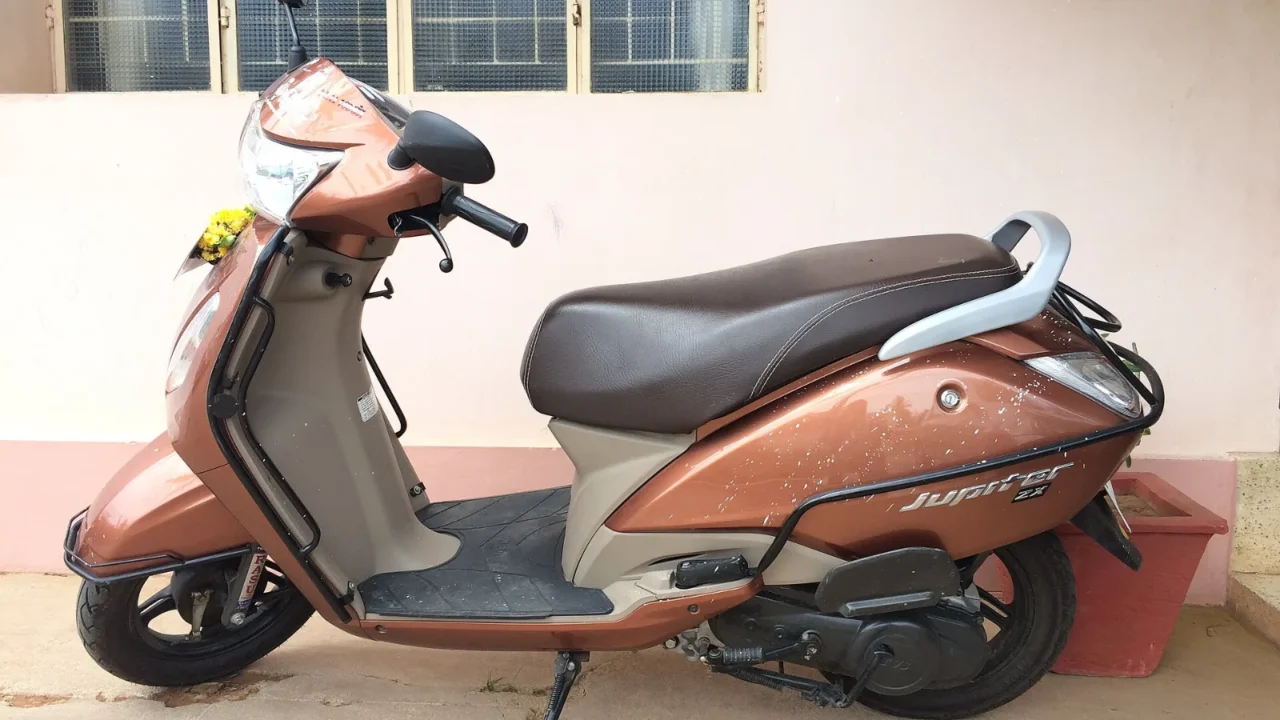
The TVS Jupiter is one of India’s best-selling scooters, and TVS sells an electric scooter, the iQube, from the same showrooms. In Delhi, after the PM E-DRIVE discount and the Delhi government subsidy, the cheapest iQube costs only about ₹3,300 more on-road than a comparable connected Jupiter. We compared what each costs to buy and run over seven years, using TVS’s own Delhi prices.
The short answer
In Delhi, the iQube 2.3 kWh comes out about ₹1.06 lakh cheaper than a Jupiter over 7 years.
The iQube costs about ₹0.31 a km to charge, mostly at home, against ₹1.92 a km for the petrol Jupiter at its tested mileage. At 9,000 km a year, that’s a saving of about ₹14,500 a year on fuel alone. It’s ahead within the first few months, and still about ₹92,000 cheaper over 7 years without the Delhi subsidy.
Delhi prices: iQube vs Jupiter
| Model | Ex-showroom | Subsidies | On-road (effective) |
|---|---|---|---|
| TVS Jupiter Drum | ₹74,700 | — | ₹89,621 |
| TVS Jupiter Drum Alloy | ₹79,725 | — | ₹95,145 |
| TVS Jupiter SmartXonnect Drum | ₹84,925 | — | ₹1,00,860 |
| TVS Jupiter SmartXonnect Disc | ₹87,525 | — | ₹1,03,718 |
| TVS iQube 2.3 kWh | ₹1,21,874 | −₹5,000 PM E-DRIVE, −₹20,000 Delhi | ₹1,04,205 |
| TVS iQube 3.1 kWh | ₹1,38,465 | −₹5,000 PM E-DRIVE, −₹27,000 Delhi | ₹1,14,113 |
| TVS iQube 3.5 kWh | ₹1,48,700 | −₹5,000 PM E-DRIVE, −₹30,000 Delhi | ₹1,21,544 |
Source: tvsmotor.com price tables with Delhi selected, 27 November 2026. iQube ex-showroom prices include the charger and GST. TVS lists the Delhi government subsidy as “self claim”, so the buyer applies for it after purchase. Where no state subsidy applies, the iQube costs ₹20,000–₹30,000 more, depending on the battery.
Running cost per km
| TVS iQube 2.3 kWh | TVS Jupiter 110 | |
|---|---|---|
| Energy use | about 28 km per kWh (incl. charging losses) | 53.3 km/l (Autocar India test) |
| Energy price | ₹8 a unit at home, 5% at ₹20 in public | ₹102.12 a litre (Delhi) |
| Cost per km | ₹0.31 | ₹1.92 |
| 9,000 km a year | ₹2,764 | ₹17,244 |
The Jupiter 110 is very frugal for a petrol scooter, but the iQube still costs about a sixth as much per km. Even with a less efficient 22 km per kWh, the iQube’s fuel bill is about a fifth of the Jupiter’s.
7-year cost in Delhi
Bought with cash, ridden 9,000 km a year for 7 years, with servicing, insurance renewals and resale value included.
| 7-year cost | iQube 2.3 kWh | Jupiter SXC Drum |
|---|---|---|
| On-road price (after subsidies) | ₹1,04,205 | ₹1,00,860 |
| Charging vs petrol | ₹20,550 | ₹1,28,193 |
| Servicing | ₹14,000 | ₹28,000 |
| Insurance | ₹17,500 | ₹15,400 |
| Resale after 7 years | −₹31,262 | −₹41,353 |
| Total | ₹1,24,994 | ₹2,31,101 |
Does the iQube still win if…
| Scenario | 7-year result |
|---|---|
| Delhi prices (above) | iQube cheaper by ₹1,06,107 |
| You ride 12,000 km a year | iQube cheaper by ₹1,41,988 |
| Your Jupiter returns 49 km/l (owners’ average) | iQube cheaper by ₹1,17,356 |
| The iQube manages only 22 km per kWh | iQube cheaper by ₹1,00,502 |
| You compare with the cheapest Jupiter Drum (₹89,621) | iQube cheaper by ₹99,476 |
| You buy the iQube 3.1 kWh instead | iQube cheaper by ₹99,171 |
| No Delhi subsidy (other states) | iQube cheaper by ₹92,107 |
| You keep it 5 years | iQube cheaper by ₹70,816 |
| You ride only 6,000 km a year | iQube cheaper by ₹70,226 |
Compare with your own km and city
Our two-wheeler calculator opens with the iQube and Jupiter figures above. Change the prices for your state, your daily distance and your electricity rate.
Which should you buy?
Choose the iQube if…
- you can charge at home or at work;
- you ride in the city, mostly under 80–90 km a day;
- you want the lowest running cost: about ₹1,200 a month less on fuel at 9,000 km a year.
Choose the Jupiter if…
- you have nowhere to charge;
- you regularly ride long distances in a day;
- you’d rather avoid any battery-replacement risk after the warranty.
For a car-sized version of the same question, see Tata Nexon EV vs petrol vs CNG and our EV vs petrol cost per km guide for India.
FAQ
What is the on-road price of the TVS iQube in Delhi?
TVS’s Delhi price table shows the iQube 2.3 kWh at ₹1,21,874 ex-showroom (with charger and GST). After the ₹5,000 PM E-DRIVE discount and a ₹20,000 Delhi subsidy that you claim yourself, the effective on-road price is ₹1,04,205.
How much does it cost to charge a TVS iQube?
About ₹0.31 per km at ₹8 a unit, assuming about 28 km per kWh including charging losses and a little public charging. At 9,000 km a year, that’s about ₹2,800.
What is the mileage of the TVS Jupiter 110?
Autocar India measured 53.3 km/l overall (50.2 in the city, 56.4 on the highway). Owners on BikeWale report about 49 km/l on average.
Is the iQube cheaper than the Jupiter in the long run?
Yes, in every scenario we tested. In Delhi it’s about ₹1.06 lakh cheaper over 7 years at 9,000 km a year, and about ₹92,000 cheaper where there’s no state subsidy.
How we calculated this
- Prices: TVS Motor’s Delhi price tables, 27 November 2026; on-road prices include registration and first-year insurance.
- Energy: iQube about 28 km per kWh including charging losses, 95% home charging at ₹8 a unit and 5% public at ₹20; Jupiter 53.3 km/l (Autocar India test) at ₹102.12 a litre (Delhi); prices rising 2% a year.
- Other costs: 9,000 km a year for 7 years, cash purchase; servicing ₹2,000 vs ₹4,000 a year; insurance ₹2,500 vs ₹2,200 a year; estimated resale after 7 years 30% vs 41%. These are our two-wheeler calculator’s defaults.
Sources: TVS Motor: iQube · TVS Motor: Jupiter · Autocar India: Activa vs Jupiter real-world mileage · BikeWale: Jupiter mileage
Faisal is the founder and editor of EV vs Gas Car Cost. He builds the site’s ownership-cost calculators and reviews new cars with one question in mind: what will this car really cost to buy, finance, fuel and run? His reviews are based on manufacturer specifications, official fuel-economy and efficiency ratings, and public fuel and electricity price data, which he cites in every article. He also publishes daily car review videos on his YouTube channel, CarRev3.