Charging vs Petrol in 31 Countries: EVs Cost 13% to 50% as Much to Run
We compared home electricity and petrol prices in 31 countries using the same two cars. Charging at home costs 13% of petrol in Qatar and 50% in Ireland, and it beats petrol in every country. Rapid chargers are the exception.

In this article
How much cheaper is it to charge an electric car than to fill a petrol car? It depends a lot on where you live. We compared home electricity and petrol prices in the 31 countries covered by our calculator, using the same two cars everywhere. The answer ranges from 13% of the cost of petrol in Qatar to 50% in Ireland. In all 31 countries, charging at home is cheaper than buying petrol.
The short answer
Charging at home costs between 13% and 50% of the cost of petrol for the same distance. The middle of the ranking is 29%.
The biggest relative savings are in countries with cheap electricity or expensive petrol: Qatar (13%), the UAE, Norway and Mexico (18%) and India (19%). The smallest are in Ireland (50%), Belgium (49%), Austria (48%), Germany and Japan (47%) and the US (44%), where household electricity is relatively expensive or petrol relatively cheap.
The full ranking: EV running cost as a share of petrol
The same reference cars in every country: an EV using 16 kWh per 100 km, charged at home, and a petrol car using 6.5 litres per 100 km. Prices are in local currency.
| # | Country | Home electricity per kWh | Petrol per litre | EV per 100 km | Petrol per 100 km | EV as % of petrol |
|---|---|---|---|---|---|---|
| 1 | Qatar | QAR 0.115 | QAR 2.10 | QAR 1.84 | QAR 13.65 | 13% |
| 2 | UAE | AED 0.293 | AED 4.04 | AED 4.69 | AED 26.26 | 18% |
| 3 | Norway | NOK 1.97 | NOK 27.14 | NOK 31.55 | NOK 176.41 | 18% |
| 4 | Mexico | MXN 2.10 | MXN 28.37 | MXN 33.60 | MXN 184.41 | 18% |
| 5 | India | ₹8 | ₹102.12 | ₹128 | ₹664 | 19% |
| 6 | Thailand | ฿3.97 | ฿48.99 | ฿63.52 | ฿318.44 | 20% |
| 7 | Saudi Arabia | SAR 0.20 | SAR 2.33 | SAR 3.20 | SAR 15.15 | 21% |
| 8 | Singapore | S$0.291 | S$3.22 | S$4.66 | S$20.93 | 22% |
| 9 | South Korea | ₩171 | ₩1,855 | ₩2,736 | ₩12,058 | 23% |
| 10 | Malaysia* | RM0.199 | RM1.99 | RM3.18 | RM12.94 | 25% |
| 11 | Netherlands | €0.237 | €2.27 | €3.79 | €14.76 | 26% |
| 12 | Portugal | €0.213 | €1.92 | €3.41 | €12.48 | 27% |
| 13 | New Zealand | NZ$0.408 | NZ$3.65 | NZ$6.53 | NZ$23.72 | 28% |
| 14 | France | €0.232 | €2.04 | €3.71 | €13.26 | 28% |
| 15 | Canada | C$0.17 | C$1.48 | C$2.72 | C$9.62 | 28% |
| 16 | Denmark | DKK 2.06 | DKK 17.52 | DKK 32.99 | DKK 113.88 | 29% |
| 17 | Australia | A$0.33 | A$2.345 | A$5.28 | A$15.24 | 35% |
| 18 | Poland | PLN 0.914 | PLN 6.43 | PLN 14.62 | PLN 41.80 | 35% |
| 19 | Brazil | R$0.943 | R$6.47 | R$15.09 | R$42.06 | 36% |
| 20 | Spain | €0.243 | €1.66 | €3.89 | €10.79 | 36% |
| 21 | Switzerland | CHF 0.292 | CHF 1.97 | CHF 4.67 | CHF 12.81 | 36% |
| 22 | South Africa | R4.52 | R29.81 | R72.32 | R193.77 | 37% |
| 23 | UK | 26.32p | 170.7p | £4.21 | £11.12 | 38% |
| 24 | Italy | €0.333 | €2.00 | €5.33 | €13.00 | 41% |
| 25 | Sweden | SEK 2.72 | SEK 15.99 | SEK 43.52 | SEK 103.94 | 42% |
| 26 | United States | $0.18 | $1.01 ($3.81/gal) | $2.88 | $6.55 | 44% |
| 27 | Germany | €0.38 | €1.98 | €6.08 | €12.87 | 47% |
| 28 | Japan | ¥32.8 | ¥170 | ¥525 | ¥1,105 | 47% |
| 29 | Austria | €0.328 | €1.67 | €5.25 | €10.86 | 48% |
| 30 | Belgium | €0.347 | €1.76 | €5.55 | €11.44 | 49% |
| 31 | Ireland | €0.399 | €1.97 | €6.38 | €12.81 | 50% |
*Malaysia’s petrol price is the subsidised BUDI95 rate for eligible Malaysians (RM4.27 unsubsidised). Petrol is the 95-octane pump price (GlobalPetrolPrices, 9 November 2026) except: US AAA national average (16 November 2026), UK DESNZ (9 November 2026), Germany ADAC (11 November 2026), Canada CAA national average (16 November 2026), Australia AIP national average (week ending 8 November 2026), India Delhi price. Electricity is the latest household price published by GlobalPetrolPrices in 2026, except: UK Ofgem price cap, US EIA residential average. Germany, Canada, Australia and India use typical estimates.
Why the gap varies so much
- Cheap power, subsidised or not: the Gulf states sell both electricity and petrol cheaply, but electricity is cheaper still. A full Qatar “tank” of electricity for 100 km costs under QAR 2.
- Expensive petrol: Norway, Mexico and India tax or price petrol highly relative to household power, so EVs save the most.
- Expensive household electricity: Ireland, Belgium, Germany and Austria have some of the highest power prices we track. EVs still cost only about half as much per km as petrol there, but the gap is smaller.
- Cheap petrol: in the US, gasoline at $3.81 a gallon is cheap by global standards, so an EV saves less in percentage terms, even with average power at 18¢/kWh.
The big exception: public rapid charging
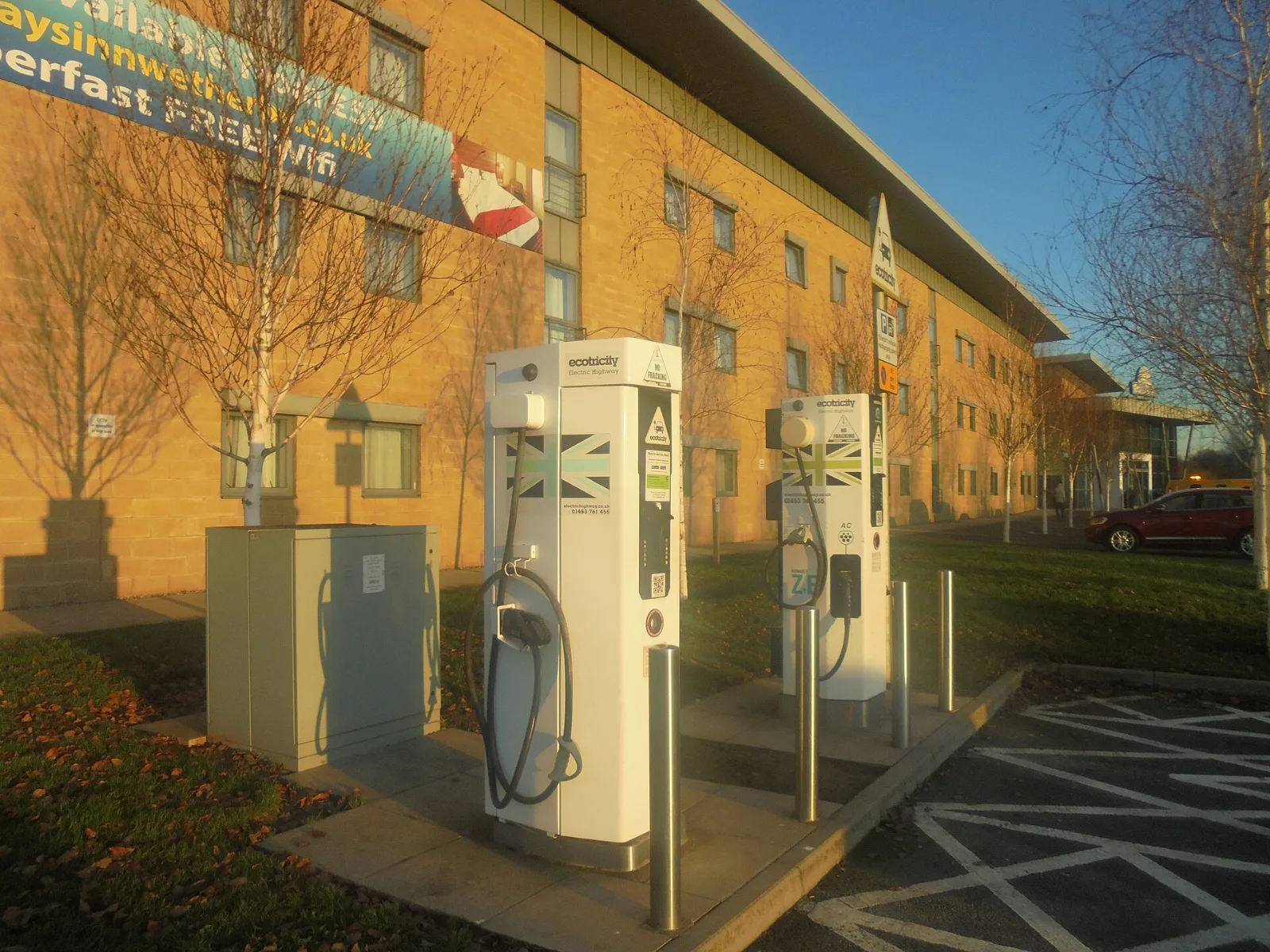
All of these figures assume charging at home. Public rapid chargers cost much more, and in some countries they cost more than petrol:
- UK: at Zapmap’s October 2026 average of 82p/kWh, our reference EV costs £13.12 per 100 km, against £11.12 for petrol. Charging only at rapid chargers costs 18% more than petrol.
- US: at a 56.9¢/kWh Supercharger rate (Paren’s Q3 2026 non-member average), it costs $9.10 per 100 km against $6.55 for gas, 39% more.
- The break-even: divide the petrol cost per 100 km by 16. In the UK, any public charger under about 69p/kWh beats petrol. In the US, the break-even is about 41¢/kWh.
See the full 10-year cost in your country
Choose any of the 31 countries and our calculator loads local fuel and electricity prices, incentives and taxes. Then adjust your mileage, tariff and loan.
FAQ
In which country is it cheapest to run an electric car compared with petrol?
In our 31-country comparison, Qatar: charging at home costs about 13% of the cost of petrol for the same distance. The UAE, Norway and Mexico follow at about 18%.
Is charging an EV cheaper than petrol everywhere?
At home, yes, in all 31 countries we checked: EV running costs range from 13% to 50% of petrol costs. At public rapid chargers, not always. In the UK and US, rapid-only charging costs more than petrol at current average prices.
How much cheaper is it to charge an EV than buy petrol in the UK?
At the Ofgem price cap, our reference EV costs £4.21 per 100 km against £11.12 for petrol, or 38% of the cost.
Why is the saving smaller in Germany and Ireland?
Household electricity is expensive there (about 38 to 40 cents per kWh), while petrol is not much dearer than elsewhere in Europe. An EV still costs only around half as much per km.
How we calculated this
- Reference cars: an EV using 16 kWh per 100 km and a petrol car using 6.5 L per 100 km, in every country. Your own car will differ. The comparison shows how much prices alone change the result.
- Cost per 100 km: EV = 16 × home electricity price; petrol = 6.5 × petrol price per litre. Charging losses are not included. Adding 10% would raise every EV figure by 10% without changing the ranking.
- Prices: the default prices in our calculator, reviewed 12 November 2026, with US and Canadian gasoline prices updated to the 16 November 2026 averages from AAA and CAA. Sources are listed under the ranking table.
- Not included: purchase price, financing, insurance, maintenance, taxes, grants and resale.
Sources: GlobalPetrolPrices.com · AAA · EIA · DESNZ · Ofgem · ADAC
Faisal is the founder and editor of EV vs Gas Car Cost. He builds the site’s ownership-cost calculators and reviews new cars with one question in mind: what will this car really cost to buy, finance, fuel and run? His reviews are based on manufacturer specifications, official fuel-economy and efficiency ratings, and public fuel and electricity price data, which he cites in every article. He also publishes daily car review videos on his YouTube channel, CarRev3.