Public EV Charging Keeps 20% VAT While Home Charging Pays 0%: What the Gap Costs
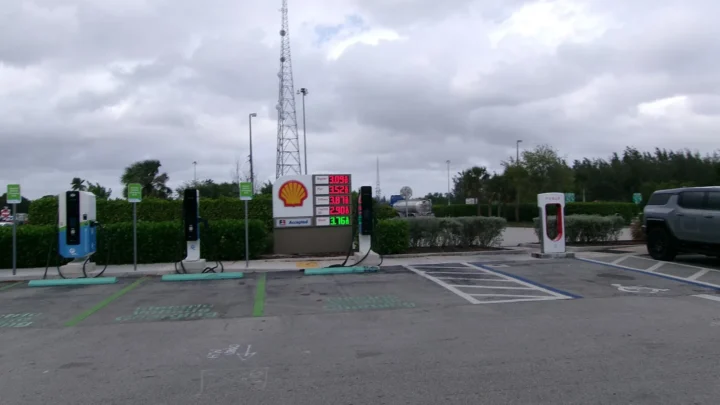
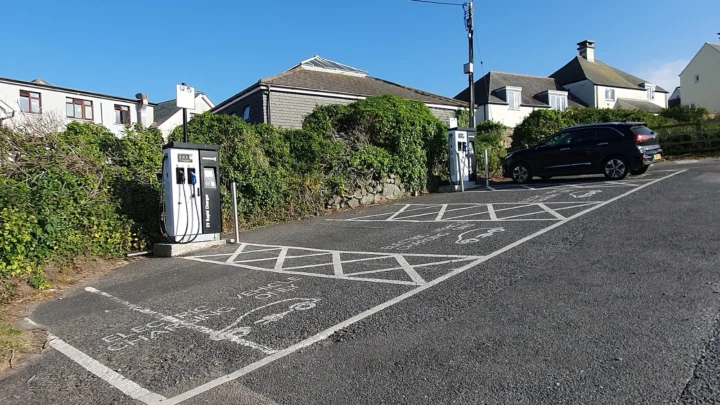
The Budget confirmed 20% VAT on public and workplace EV charging from 1 November 2026, while household electricity stays at 0% until June 2027. VAT adds 13.7p to every kWh at a rapid charger, and drivers without a driveway now pay more per mile than for petrol.

In this article
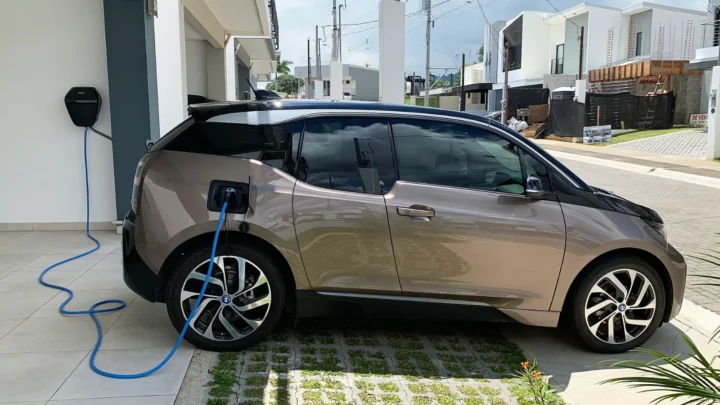
Charging an electric car at home in Great Britain now carries 0% VAT. Charging at a public charger carries 20%. The Budget confirmed that the government will write the 20% rate for public and workplace chargers into law from 1 November 2026, despite a tribunal ruling that some public charging could qualify for the 5% rate. At the same time, the temporary 0% rate on household electricity was extended to the end of June 2027. We worked out what that VAT gap costs drivers, especially those without a driveway.
The short answer
VAT adds 13.7p to every kWh at an 82p rapid charger, and about 9p at a 54p standard charger. Home charging adds none.
For a driver who can’t charge at home and uses standard public chargers, VAT at 20% instead of 5% costs about £206 a year at 10,000 miles. On rapid chargers, it’s about £313 a year. A driver who charges at home pays about 8p a mile, against 16.5p on standard public chargers and 25p on rapid ones.
What the Budget decided
- Public and workplace charging: the government will legislate in the Finance Bill so that electricity from publicly accessible and workplace charging points is standard-rated for VAT and not treated as domestic use. It applies to supplies from 1 November 2026.
- Why it matters: a tax tribunal had found that some public charging could qualify for the reduced 5% rate. HMRC has kept its position that public charging is standard-rated, and the new law confirms it.
- Home charging: charging at home on your household supply isn’t affected. It counts as household electricity, which is zero-rated (0% VAT) in Great Britain from 1 October 2026 to 30 June 2027 after the Budget extended the temporary cut by three months. Northern Ireland stays at 5%.
- Also announced: £100 million over two years to reduce costs at lower-powered local public chargers, and a taskforce on using domestic-style tariffs at those chargers.
What the VAT gap means per mile
For a typical EV doing 3.6 miles per kWh, plus 10% charging losses, at 10,000 miles a year (about 3,060 kWh):
| Where you charge | Price per kWh | VAT included | Cost per mile | 10,000 miles a year |
|---|---|---|---|---|
| Home, Ofgem price cap | 26.32p | 0p (0%) | 8.0p | £804 |
| Standard public charger | 54p | 9.0p (20%) | 16.5p | £1,650 |
| Standard public charger, if VAT were 5% | 47.3p | 2.3p (5%) | 14.4p | £1,444 |
| Rapid charger | 82p | 13.7p (20%) | 25.1p | £2,506 |
| Rapid charger, if VAT were 5% | 71.8p | 3.4p (5%) | 21.9p | £2,192 |
| Petrol car, 48 mpg at 170.7p a litre | — | — | 16.2p | £1,617 |
Public prices are Zapmap’s October 2026 averages, which include 20% VAT. The 5% rows show the same price with VAT at 5% instead. Home electricity: Ofgem price cap, October–December 2026 (0% VAT). Petrol: DESNZ weekly UK pump price, 9 November 2026.
The result is stark: a driver without a driveway who uses standard public chargers pays slightly more per mile than a 48 mpg petrol car, and twice as much as a neighbour who charges at home. With VAT at 5%, the same public charging would cost 14.4p a mile, just under petrol.
How to cut your charging bill
- Charge at home if you possibly can. Even at the price cap, home charging costs about half of standard public charging per mile. On an off-peak EV tariff it’s far less.
- Use workplace charging carefully: it’s also standard-rated under the new rules, so it’s only cheap if your employer prices it low.
- Look for local lower-powered chargers. The £100 million fund is aimed at cutting costs at these chargers, so prices on some local networks may fall over the next two years.
- Use subscriptions where they pay: several rapid networks offer lower per-kWh prices for a monthly fee. They’re worth it if you rapid-charge often.
- Remember eVED: from April 2028, electric cars are due to pay 3p a mile on top. For public-only charging, that widens the gap with petrol.
Does an EV still make sense without a driveway?
Our UK calculator lets you set your own home and public charging prices and the share of each. It also includes the Electric Car Grant and eVED from 2028.
FAQ
What VAT rate applies to public EV charging in the UK?
20%. The Budget confirmed that electricity from publicly accessible and workplace charging points is standard-rated, with legislation applying to supplies from 1 November 2026.
Is there VAT on charging an EV at home?
Not in Great Britain at the moment. Household electricity is zero-rated from 1 October 2026 to 30 June 2027, and charging at home counts as household electricity. Northern Ireland remains at 5%.
How much VAT do I pay at a rapid charger?
At Zapmap’s October 2026 average rapid price of 82p/kWh, about 13.7p of every kWh is VAT. At a 54p standard charger, it’s about 9p.
Is public charging cheaper than petrol?
At standard public chargers (54p/kWh), a typical EV costs about 16.5p a mile, slightly more than a 48 mpg petrol car at 16.2p. At rapid chargers (82p/kWh), it costs about 25p a mile. Charging at home costs about 8p.
How we calculated this
- Typical EV: 3.6 miles per kWh plus 10% charging losses: about 3,060 kWh for 10,000 miles.
- VAT in a price: price × 20/120 for a VAT-inclusive price at 20%. The “if VAT were 5%” rows take the price before VAT and add 5%.
- Prices: Zapmap charging price index (October 2026) for public charging; Ofgem price cap (October–December 2026) for home charging; DESNZ (9 November 2026) for petrol.
Sources: HM Treasury: Budget 2026 · HMRC: VAT on fuel and power (Notice 701/19) · Ofgem price cap rates · Zapmap charging price index
Faisal is the founder and editor of EV vs Gas Car Cost. He builds the site’s ownership-cost calculators and reviews new cars with one question in mind: what will this car really cost to buy, finance, fuel and run? His reviews are based on manufacturer specifications, official fuel-economy and efficiency ratings, and public fuel and electricity price data, which he cites in every article. He also publishes daily car review videos on his YouTube channel, CarRev3.